Road Trip Emergency Bathroom Kit Checklist 2026
Most road trip packing lists cover snacks, chargers, water, and a first-aid kit. The bathroom situation? Usually ignored until it becomes a problem.
A closed rest stop. A 45-minute traffic jam with nowhere to pull over. A remote stretch of highway at 2 a.m. with no gas stations in sight. A road trip with kids who need to go right now, or an older parent who cannot wait. These moments are not rare. They happen on almost every long drive.
A small emergency bathroom kit does not mean overpacking your car. It means spending five minutes thinking ahead so you do not spend an hour stressed, uncomfortable, or scrambling on the side of the road. Here is exactly what to keep in your car before a long drive.
Table of Contents
Why bathroom emergencies happen on road trips?
It is easy to assume you will always find a gas station or rest stop in time. That assumption is wrong more often than people expect. Rest stops close for maintenance with no warning. Many rural highways have 60- to 80-mile gaps between facilities. Traffic jams in cities or on highways can lock you in place for well over an hour.
At night, random roadside stops feel unsafe, especially when traveling alone or with kids. Remote routes, camping trips, and mountain drives can have almost no facilities for hours at a stretch. Add in a stomach issue, a bladder infection, or a car full of children, and the timeline gets a lot shorter. None of this is unusual. It is just the reality of long drives, and a small kit handles it all.
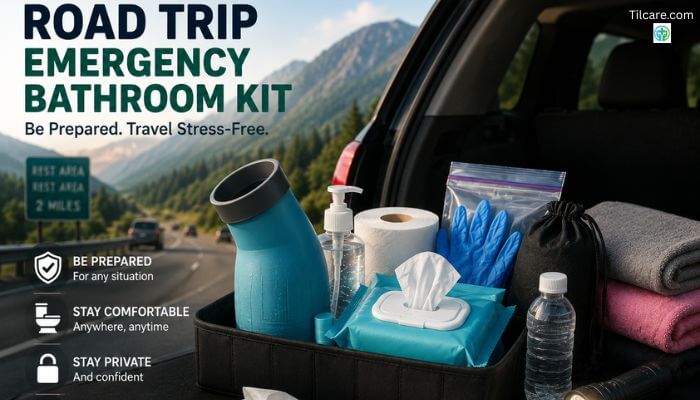
Road trip bathroom kit checklist
You do not need to spend much money or take up much space. The core kit fits in a small zip bag or a compact organizer pouch.
- Wet wipes — More versatile than toilet paper. Useful for hands, surfaces, and cleanup when water is not available.
- Hand sanitizer — Useful after roadside stops, gas station bathrooms, or portable bathroom use, especially when you cannot wash your hands with soap and water right away.
- Travel tissue or toilet paper — Gas station bathrooms run out. Keep a small pack in the kit.
- Disposable gloves — Useful when handling waste bags or managing anything unsanitary.
- Sealable waste bags — Heavy-duty zip-lock style bags for containing used wipes, tissues, or solid waste in a real emergency.
- Small trash bags — For general waste from the kit, used tissues, wrappers, or anything that needs to be left in the car at the next stop.
- Portable urinal bottle — Compact, leak-proof, and genuinely useful in traffic jams, remote drives, and night trips. More on this below.
- Privacy towel or blanket — For roadside stops where you need a screen. A large sarong or lightweight blanket works well.
- Extra underwear or lightweight clothes — One change of clothes takes almost no space and removes a lot of potential stress.
- Small rinse water bottle — A 16 oz bottle kept in the kit for rinsing hands or cleaning reusable items.
- Odor-control pouch or bag — Keeps the kit from smelling, especially in a hot car.
- Feminine hygiene items — Period timing does not care about your road trip schedule. Keep a small supply in the kit regardless.
- Basic medication — Imodium, antacids, or whatever you use for stomach issues. Motion sickness medication, if anyone in the car needs it.
- Flashlight or headlamp — For night stops. Using your phone flashlight while trying to manage a roadside bathroom situation is a recipe for dropping your phone in the dark.
What to pack for different types of road trips?
Not every road trip has the same needs. Here is a quick breakdown of what to prioritize based on your specific drive.
- For highway drives: Wet wipes, hand sanitizer, travel tissues, a portable urinal bottle, and sealable bags cover most situations. Facilities exist, but are not always convenient or clean.
- For camping or remote routes: Add toilet paper, disposable gloves, waste bags, a rinse water bottle, and a privacy towel. You may be fully off-grid for hours at a time.
- For traveling with kids: Prioritize wet wipes, extra clothes, small trash bags, hand sanitizer, and a compact towel. Kids’ timelines are not negotiable.
- For older family members: A portable urinal bottle, wipes, gloves, and an easy-access bag are especially important. Plan restroom breaks more frequently and keep the kit within arm’s reach from the back seat.
- For night driving: Essentials include a flashlight, a privacy blanket, hand sanitizer, and an emergency bathroom backup. Stopping alone on a dark highway is already stressful — the kit removes one layer of that.
Where to store the kit in your car?
The kit is useless if you cannot reach it when you need it. This is the step most people skip, and it matters most. A trunk storage box works well for organized kits on regular road trips. An under-seat pouch keeps the kit accessible from the front or back without digging through luggage. A backseat organizer that hangs from the headrest is a good option when traveling with kids. A waterproof zip bag keeps everything contained and easy to grab.
Whatever you use, keep urgent items, wipes, sanitizer, the portable urinal, and sealable bags in the most accessible section. Keep the clean and used-item sections clearly separated, even just by using different-colored bags. The goal is to reach what you need in under 30 seconds, without unpacking half the trunk in the dark.
How to keep the kit clean and odor-free?
A bathroom kit that sits in a hot car for three months without being checked becomes a problem of its own. Replace wipes and tissues before long trips, as they dry out or expire. Check sanitizer levels and expiry dates. Use sealable or odor-resistant bags for any items that have been used. Empty waste bags at the next available trash point, and never leave used items sitting in a hot car any longer than necessary.
For reusable items like a portable urinal bottle, rinse after each use and dry thoroughly before storing. A damp item stored in a sealed kit will develop odor quickly. See our guide on how to clean a portable urinal for a full step-by-step. If you are wondering about the general hygiene of reusable versus disposable options, our portable urinal hygiene guide covers it in detail.
Reusable vs. Disposable bathroom items: what makes sense?
Both have a place in a well-built road trip kit. The best setup is usually a combination of the two.
Disposable bags, wipes, and gloves are ideal for cleaning when there is no running water, such as camping, at rest stops, or in emergency roadside situations. They handle waste and are discarded. Simple.
Reusable items, like a portable urinal bottle, make more sense for people who drive frequently, take regular long-distance trips, or want a more reliable and cost-effective solution over time. A quality reusable urinal bottle, properly cleaned after each use, is more durable, more reliable, and generates less waste than disposable alternatives. For a full comparison of the tradeoffs, see our guide on reusable vs. disposable urinals. For most regular road trippers, the answer is a reusable urinal bottle as the core item, with disposable bags and wipes as backup.
Final checklist
Screenshot this, screenshot it, or keep it open when you pack.
- Wet wipes
- Hand sanitizer
- Travel tissue or toilet paper
- Disposable gloves
- Sealable waste bags
- Small trash bags
- Portable urinal bottle
- Privacy towel or blanket
- Extra underwear or lightweight clothes
- Small rinse water bottle
- Odor-control pouch
- Feminine hygiene items
- Basic stomach or motion sickness medication
- Flashlight or headlamp
Frequently asked questions
What should I include in a road-trip bathroom emergency kit?
Wet wipes, sanitizer, tissue, gloves, sealable bags, a small trash bag, a privacy towel, extra clothes, and a portable urinal or emergency bathroom backup.
Is a portable urinal useful for road trips?
Yes. It is useful during traffic jams, night drives, camping routes, closed rest stops, or when traveling with older family members.
How do I stop the kit from smelling in the car?
Use sealable bags, empty waste quickly, avoid leaving used items in hot cars, and clean reusable items after use.
Where should I store the bathroom kit?
Keep it in the trunk, under a seat, or in a backseat organizer, but make sure it is easy to reach during an emergency.
Is a Portable Urinal Hygienic? Read this before (2026)