How to Use a Portable Urinal for Men? Travel Guide & Bedside 2026
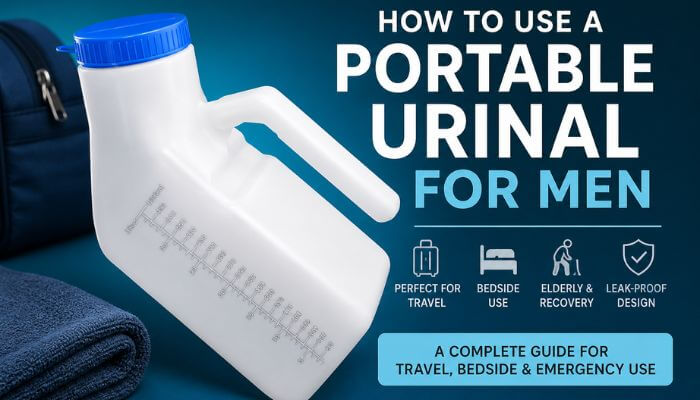
There are moments when reaching a toilet simply is not an option a gridlocked motorway, a camping trip deep in the woods, a night of broken sleep, or weeks of post-surgery rest. A portable urinal for men exists precisely for these moments. It is not a niche medical product anymore drivers, travelers, elderly men, and outdoor enthusiasts all rely on a male urinal as a straightforward, hygienic solution to a very real problem.
This guide walks through everything correct usage, leak prevention, cleaning, and how to pick the right one.
Table of Contents
What is a portable urinal for men?
At its core, a portable male urinal is a sealed, handheld container built to collect urine away from a toilet. What separates a good one from a bad one comes down to three things the opening size, the seal quality, and the material it is made from.
Portable urinals are also discussed in broader travel and emergency bathroom guides. For example, WikiHow’s guide on peeing in a bottle lists the Tilcare Travel Urine Collection Container among portable urine bottle options available on Amazon.
- How a male urinal bottle works: The user positions the opening against the body, urinates directly into the container, and closes the cap straight away. Quality models use either a one-way internal valve or a threaded screw cap that locks tight both designed to stop any liquid from escaping once sealed. There is no complicated setup involved.
- Bedside vs travel urinals: These two serve different purposes and are sized accordingly. A bedside urinal sits on a nightstand or under a bed typically holding between 800ml and 1000ml to last through the night without needing to be emptied. A travel version prioritizes compactness over capacity, slim enough to slide into a door pocket, day bag, or camping kit.
- Reusable vs disposable: Reusable models are built from BPA-free plastic or medical-grade silicone wash them out, let them dry, and they are ready again. Disposable urinal bags take a different approach entirely an absorbent gel lining converts liquid into a solid on contact, meaning no emptying, no rinsing, and no spill risk. The tradeoff is cost and waste over time.
When should you use a portable male urinal?
The range of situations where a portable urinal proves useful is wider than most people expect:
- Motorway driving and traffic — hours behind the wheel with no services in sight becomes manageable
- Night-time urgency — getting out of bed repeatedly through the night is exhausting and, for some, a fall risk
- Reduced mobility in older men — the time between feeling the urge and reaching the bathroom narrows with age
- Surgical recovery — certain procedures leave men unable to move freely for days or weeks
- Outdoor activities — hiking, fishing, festivals, or any situation where a toilet block is nowhere nearby
- Commercial driving — delivery routes and long-haul driving rarely allow for convenient stops
- Unpredictable emergencies — flooded roads, stadium queues, power cuts situations nobody plans for
How to use it?
- Prepare the urinal before use Before anything else, check the bottle is completely empty and the cap or valve is functioning properly. Run a quick visual check for hairline cracks along the body or signs of wear around the seal small defects become big problems mid-use. For disposable bags, verify the gel lining is dry and undisturbed inside the packaging before tearing it open.
- Position the urinal correctly Grip the bottle firmly in one hand with the opening facing toward the body. Standing users should angle the neck of the bottle slightly downward to work with gravity. Anyone using it seated or flat in a car seat, wheelchair, or bed should angle it upward just enough to prevent any backflow. Most urinal bottle designs account for this naturally through their shape.
- Seal the bottle after use The cap goes on the moment you finish not after you set it down, not after you adjust your clothing. Immediately. Twist or press it until it clicks or locks, then place the bottle on a flat surface in an upright position. Rushing this step is where most spills happen.
- Dispose or empty safely Get it emptied into a toilet as soon as practically possible. Urine left sitting generates ammonia rapidly the longer it sits, the harder the smell is to eliminate later. Disposable bags get folded, sealed at the top, and dropped in a general waste bin. They should never be flushed.
- Clean and dry the urinal The rinse happens straight after emptying not hours later. Fill the bottle a quarter of the way with warm water, shake it around, and pour it out. Then wash with a cleaning solution and rinse again until the water runs completely clear. Before putting it away, stand it upside down or leave the cap off so air can circulate inside until it is bone dry.
How to prevent leaks and spills?
A portable urinal that leaks defeats its entire purpose. Avoiding it comes down to habits rather than luck:
- A screw-lock or valve cap is the baseline requirement avoid any model without a secure closure mechanism
- Watch the fill level, most bottles have a maximum line marked inside; stop well before reaching it
- After sealing, the bottle travels upright only, on its side is an invitation for leakage even with the best cap
- One-handed grip matters, a textured or contoured body prevents the bottle from slipping during use
- Check reusable models every few weeks for stress cracks around the neck or base where plastic is thinnest
- A car dashboard or back shelf in summer sun gets extremely hot, that kind of heat softens plastic and compromises seals over time, so store it somewhere shaded
How to clean a male urinal bottle?
- Daily cleaning routine: Warm water rinse immediately after emptying, followed by a shake with diluted antibacterial soap inside the bottle. Pour it out and rinse twice more so nothing is left coating the interior walls.
- Removing urine odour: Fill the bottle halfway with a mixture of white vinegar and water in equal measure. Leave it to sit for around 15 minutes the acidity breaks down the compounds responsible for the smell. Baking soda dissolved in warm water does the same job if vinegar is not available.
- Best cleaning solutions: Antibacterial dish soap, diluted white vinegar, or dissolvable sanitising tablets designed for medical equipment all work well. Stay away from undiluted bleach it is too aggressive for plastic and degrades the material from the inside out with regular use.
- How often to sanitise: Every single use without exception. For anyone using it multiple times daily overnight or during recovery, a full sanitise should happen at least once every 24 hours regardless of how many times it has been rinsed.
- Drying and storage: Cap off, opening facing down or sideways, left somewhere with airflow until completely dry inside. Sealing a damp bottle traps moisture and creates exactly the conditions bacteria need to multiply.
How to choose the best portable urinal for men?
- Leak-proof lid design: The seal is the most important feature on any portable urinal. A threaded screw cap with a gasket or a one-way valve either works, both need to be tested before relying on in a real situation.
- Bottle capacity and size: 500ml handles most travel and general use scenarios comfortably. Step up to 800ml or above for overnight and medical use where getting up to empty it is not always practical.
- Wide vs narrow opening: Wider is better for most users. A generous opening reduces the precision needed during use, which matters particularly for elderly men or anyone with limited hand coordination.
- Portability: The right size fits into whatever space it needs to fit glove box, backpack side pocket, bedside drawer. If it requires rearranging things to store it, it is too bulky.
- Easy-clean materials: A smooth, seamless interior makes rinsing thorough and quick. Any ridges, grooves, or internal joins trap residue and create persistent odour over time. BPA-free plastic and medical silicone are the materials to look for.
- Comfortable grip: A ribbed or textured exterior gives enough friction for confident single-handed use. This matters more than it sounds particularly during use in a moving vehicle or for men with reduced grip strength.
Choose the Right Tilcare Urinal for You
Pick the one that best fits your needs.
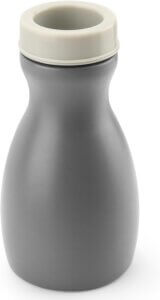
Tilcare Urinal Bottle – 30oz
Discreet, lightweight, and easy to carry.
- 30oz / 900ml capacity
- Leak-proof screw cap
- Glow-in-the-dark lid
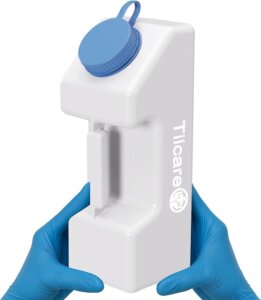
Tilcare 3L Portable Urinal
Extra-large capacity for long trips and overnight use.
- 3L / 100oz capacity
- Spill-proof secure lid
- Sturdy handle grip
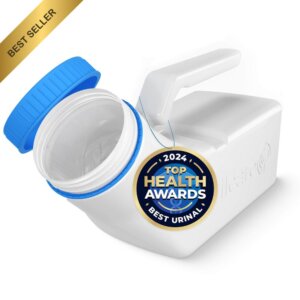
Tilcare Standard Male Urinal
Designed for bedside support and home care use.
- 30oz / 900ml capacity
- Wide-mouth opening
- Easy-hold handle
Comparison
| Feature | Reusable Urinal | Disposable Bag |
| Reusability | Multiple uses | Single use only |
| Convenience | Requires cleaning | No cleaning needed |
| Odour control | Requires maintenance | Gel neutralises instantly |
| Travel practicality | Compact, refillable | Lightweight, no emptying |
| Long-term cost | Lower over time | Higher with regular use |
| Environment | Less waste | More packaging waste |
Frequently Asked Questions
How do you use a portable urinal for men without spilling?
Angle correctly for your position, seal the cap the moment you finish, and keep it upright until emptied.
Can a male urinal bottle leak during travel?
Only if the cap is not fully locked or the bottle is stored on its side both are easily avoided with a quick check before placing it in a bag.
How often should you clean a portable urinal?
After every single use odour develops faster than most people expect when cleaning is skipped even once.
What is the best way to remove odour from a urinal bottle?
Equal parts white vinegar and water left inside for 15 minutes breaks down odour at the source without damaging the plastic.
What is the difference between a bedside urinal and a travel urinal?
Capacity and size, bedside models hold more for overnight use while travel versions are built slim for portability.

How Long Should You Use a Breathing Trainer Daily? (2026 Guide)