
How to Clean a Portable Urinal and Maintain It? (2026)
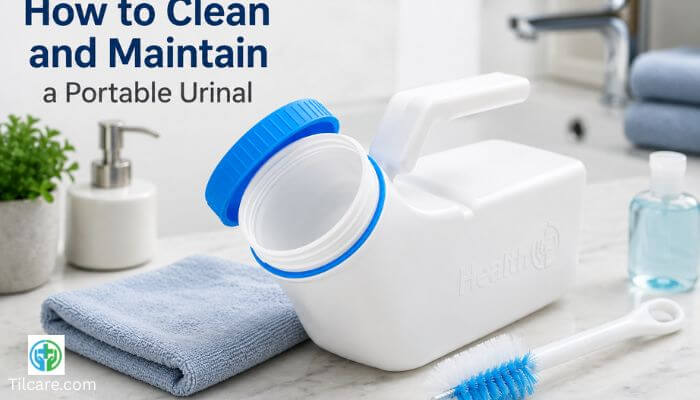
A reusable portable urinal for men can be very useful for travel, bedside use, mobility needs, or emergency situations. But like any plastic urine bottle or urinal bottle, it needs regular cleaning to prevent odor, residue buildup, and hygiene issues. This guide explains how to clean a portable urinal properly, how to reduce smells, and how to maintain it for safer reuse.
Get the routine right from the start, and a reusable portable urinal for men bottle stays fresh, functional, and genuinely reliable for as long as you need it.
Table of Contents
Why is cleaning a portable urinal regularly important?
Think of it less as cleaning and more as resetting the bottle after every use. Urine left inside, even briefly, begins breaking down and producing ammonia. That is where persistent odour originates. It does not take long, and it does not require negligence. A bottle rinsed carelessly once or twice is enough to start the cycle. Beyond smell, bacterial growth on surfaces that are not properly cleaned becomes a hygiene concern over repeated use. The cap and sealing area are particularly overlooked, where residue collects and gets reintroduced every time the bottle is opened.
Regular cleaning also preserves the leakproof performance of the cap seal. Residue buildup around the threading degrades the seal quality over time. A bottle that started completely leakproof can develop minor seepage simply from a cap that has never been properly cleaned.
How to clean a portable urinal or urinal bottle after daily use?
The daily routine does not need to be long. What it needs to be is consistent:
- Empty immediately: The longer urine sits inside a sealed bottle, the harder the subsequent cleaning becomes. Empty at the first available opportunity — not at the end of the day.
- Rinse with warm water first: Before soap touches anything, flush the interior with warm water and shake it around. This removes the bulk of residue before cleaning begins and prevents soap from mixing with concentrated liquid.
- Wash with mild soap: A small amount of mild dish soap, shaken well inside the bottle with warm water, covers the interior walls completely. Pay attention to the neck and threading where the cap sits — these areas collect residue that a shake alone will not reach.
- Clean the cap separately: Remove the cap and clean it independently. Run it under warm water, work soap into the threading with a finger or soft brush, and rinse completely. A cap cleaned as an afterthought is a cap that will eventually cause problems.
- Rinse until completely clear: Soap residue left inside the bottle builds up over time and contributes to odour in its own right. Rinse until the water running out is completely clear with no trace of soap.
- Dry with the cap off: Stand the bottle inverted or on its side with the opening facing outward and the cap removed. Air needs to circulate inside. A bottle stored cap-on before it is fully dry is the single most common cause of persistent odour in reusable urinals.
How to remove odor?
Odour that has already developed requires a different approach than prevention. The two most effective methods use ingredients most people already have:
- White vinegar soak: Fill the bottle halfway with equal parts white vinegar and water. Replace the cap, shake well, then remove the cap and leave the solution sitting inside for 15 to 20 minutes. The acidity breaks down the ammonia compounds responsible for the smell rather than masking them. Rinse thoroughly afterwards and dry completely.
- Baking soda method: Dissolve two teaspoons of baking soda in warm water and fill the bottle halfway. Leave for 20 minutes, shake, and rinse. Baking soda neutralises rather than acidifies — useful when vinegar is not available or for a gentler approach on a bottle used more recently.
Neither method damages the bottle material when used at these concentrations. Avoid anything stronger than bleach and chemical disinfectants, which degrade plastic over repeated use and are unnecessary for a bottle that is cleaned consistently.
How often should you deep clean a portable urinal?
Daily rinsing and washing keep the bottle functional. Deep cleaning, a longer soak with vinegar or baking soda, is a separate step that addresses what daily cleaning does not fully reach. For regular daily users, a deep clean once a week is sufficient alongside the daily routine.
For bedside users who rely on the bottle every night, the same weekly rhythm applies. For occasional travel or emergency use, someone who uses the bottle infrequently can perform a deep clean before and after each period of use, which covers it adequately.
The mistake most people make is treating deep cleaning as a response to odour rather than a preventative habit. By the time smell is noticeable, it has already embedded in the material to some degree. Weekly maintenance prevents that point from ever being reached.
Common cleaning mistakes to avoid
- Boiling water or extremely hot water: Heat beyond what is comfortably warm softens certain plastics and can warp the bottle shape or compromise the cap seal over time. Warm water, not scalding, is the right temperature for every cleaning.
- Leaving liquid inside between uses: Even a small amount of residual liquid sealed inside an unused bottle creates the conditions for odour and bacterial buildup. Always empty before storing.
- Storing before fully dry: Sealing moisture inside a bottle accelerates everything that cleaning is trying to prevent. This single habit accounts for more odour complaints than any other factor.
- Abrasive brushes or scouring tools: These scratch the interior surface, creating microscopic grooves that trap residue and make future cleaning progressively less effective. A soft bottle brush handles the interior without causing surface damage.
- Neglecting the cap threads: The threading that connects the cap to the bottle body collects residue in the gaps between ridges. A soft brush or cotton swab worked into the threads during weekly cleaning prevents gradual seal degradation.
If you want a reusable option for travel or bedside use, choosing a portable urinal with a leak-resistant cap can make cleaning, storage, and transport easier after each use.
Can reusable portable urinals be used long-term?
Yes, that is exactly what they are designed for. The material, the cap design, and the construction of a quality reusable urinal bottle are built around repeated daily use rather than limited-cycle durability. What determines how long a bottle remains fully functional is not time, but maintenance. A bottle cleaned consistently from day one and inspected periodically for wear around the seal and base will outlast one that receives irregular attention, regardless of how premium the original product was.
Inspect the cap seal every few weeks. A seal that feels less firm than it once did or shows visible wear around the edges is worth replacing before it becomes a leak rather than after. The bottle body itself rarely fails; the cap and seal are the components that experience the most stress across repeated use.
For anyone still deciding between a reusable and disposable option before committing to a cleaning routine, the guide on reusable vs disposable portable urinal covers both in full detail.
Choose the Right Tilcare Urinal for You
Pick the one that best fits your needs.
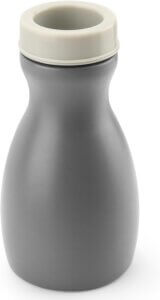
Tilcare Urinal Bottle – 30oz
Discreet, lightweight, and easy to carry.
- 30oz / 900ml capacity
- Leak-proof screw cap
- Glow-in-the-dark lid
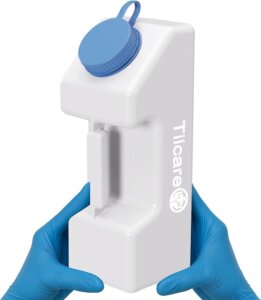
Tilcare 3L Portable Urinal
Extra-large capacity for long trips and overnight use.
- 3L / 100oz capacity
- Spill-proof secure lid
- Sturdy handle grip
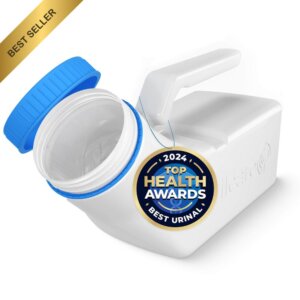
Tilcare Standard Male Urinal
Designed for bedside support and home care use.
- 30oz / 900ml capacity
- Wide-mouth opening
- Easy-hold handle
What cleaning supplies work best?
The list is shorter than most people expect:
- Mild dish soap — the everyday cleaning workhorse. Gentle on material, effective on residue, widely available
- Warm water — the carrier for everything else. Not hot, not cold
- Soft bottle brush — reaches the interior walls and base of the bottle without scratching the surface.
- White vinegar — for weekly deep cleaning and odour neutralisation
- Baking soda — an alternative to vinegar for neutralising rather than acidifying
- Cotton swabs or a small soft brush — for cleaning cap threads and the sealing area specifically
Nothing on this list is specialised or expensive. The routine works because it is consistent, not because it relies on any particular product.
Frequently Asked Questions
How do you clean a urinal bottle?
To clean a urinal bottle, empty it after use, rinse with warm water, wash with mild soap, rinse again, and let it air dry completely. For odor control, use a diluted vinegar rinse occasionally and rinse thoroughly before reuse.
How do you clean plastic urinals?
Plastic urinals should be rinsed after each use, washed with mild soap and warm water, and dried fully before storage. Avoid harsh chemicals, boiling water, or abrasive cleaning tools that may damage the plastic.

Who Needs a Portable Urinal? Common Use Cases Explained
)
)