How to Make Saline Solution for Nasal Rinsing? Ingredients, Ratios & Common Mistakes
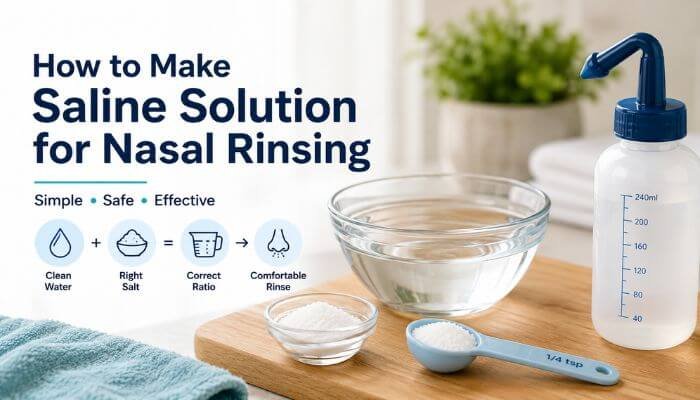
How to make saline solution for nasal rinsing? A lot of attention goes into picking the right device for nasal rinsing, but the mixture itself matters just as much. Whether someone’s using a squeeze bottle, a neti pot, or an electric irrigator, how that saline is prepared affects the whole experience.
Some kits come with pre-measured packets that take the guesswork out entirely, while others leave it up to the person to mix their own. Either way, getting the mixture right is worth understanding on its own, separate from the device or the rinsing process itself.
Quick Overview
Making a saline solution for nasal rinsing is about getting the right balance of water and salt before use. This guide explains the basic ingredients, preparation steps, common mistakes, and the difference between homemade mixtures and pre-measured saline packets. Whether you use a neti pot, squeeze bottle, or electric nasal irrigator, preparing the solution correctly helps create a more consistent rinsing routine.
Table of Contents
What is a saline solution, exactly?
At its core, it’s just salt dissolved in water at a specific balance meant for nasal use. Plain water alone isn’t used because it doesn’t match the body’s natural chemistry the way a properly balanced mixture does, which is part of why an unbalanced rinse can feel uncomfortable. Getting that salt-to-water ratio right isn’t complicated, but it does matter more than people expect the first time they try mixing their own.
If you haven’t rinsed before or want the complete walkthrough on positioning and technique, our guide on how to use a sinus rinse safely covers that step by step.”
How to make saline solution for nasal rinsing?
Water
Distilled water is the go-to choice for most people, since it’s already been purified. Sterile water works the same way. If neither is available, water that’s been boiled and then cooled to a safe temperature is a reasonable substitute. Straight tap water isn’t recommended, since treatment standards vary by location and not all municipal water is processed to a level appropriate for this kind of use.
The FDA nasal rinsing safety guidance covers this in more detail and is worth a look for anyone unsure about their local water quality.
Salt
Salt made specifically for nasal use is the safer bet here, since it’s free of the additives found in most table salt, like iodine or anti-caking agents, which can cause irritation. Regular table salt isn’t ideal for this reason, even though it might seem like an easy substitute.
Optional Additives
Some people add a small amount of baking soda to their mixture, which can make the solution feel gentler. Beyond that, there’s not much need to add anything else. Simpler tends to work better here.
Mixing It Properly
Preparing the solution comes down to a few straightforward steps: start with the right water, measure out the salt carefully rather than eyeballing it, stir until it’s fully dissolved with nothing gritty left at the bottom, check that the temperature feels comfortable (lukewarm, not hot or cold), and only mix as much as you plan to use in that session. That last part matters more than people think, since making a big batch “to save time” usually just means it sits around longer than it should.
Homemade vs. pre-measured packets
| Feature | Homemade Saline | Pre-Measured Packets |
| Preparation | Requires measuring ingredients | Ready-to-mix portions |
| Convenience | More prep work each time | Faster setup |
| Consistency | Depends on accurate measuring | Consistent ratio every time |
| Travel use | Ingredients need to be packed separately | Easier to pack and use on the go |
| Cost | Usually lower over time | Slightly more per use |
Neither option is inherently better. Someone who rinses daily and wants full control over the mixture might prefer measuring their own, while someone who wants one less thing to think about tends to lean toward packets instead.
Where people go wrong?
The most common mistakes aren’t complicated, they’re just easy to overlook. Using water straight from the tap without boiling or filtering it first is a big one. So is guessing at the salt ratio instead of measuring it, or not stirring long enough for the salt to fully dissolve, which can leave grit in the mixture.
Mixing up a large batch and letting it sit for days is another one people don’t think twice about, along with reaching for ingredients that weren’t made for this kind of use, like flavored or seasoned salts.
Storing what you’ve made
The simplest approach is mixing only what you need for that session rather than trying to stock up. If a small extra amount is left over, keep it in a clean, covered container and don’t let it sit for more than a day. Containers should be rinsed out and dried between uses so residue doesn’t build up.
Does the device change the mixture?
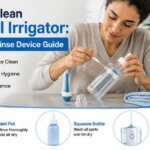
Not really, though how it’s used can vary a bit. A neti pot relies on gravity and typically uses a manually prepared mixture poured in by hand. A squeeze bottle works similarly, just with more control over the flow. An electric irrigator uses the same kind of prepared solution, just loaded into a reservoir instead of poured directly. For a closer look at how these devices compare day-to-day, our electric nasal irrigator vs. neti pot article covers that in more depth.
Where pre-measured packets fit in?
For anyone who’d rather skip the measuring altogether, the Tilcare sinus rinse kit comes with pre-measured saline packets built in, which takes that step out of the routine entirely. It’s less about one method being better and more about matching the prep to how much time and consistency someone wants out of it.
Frequently asked questions
Can I use regular tap water for saline solution?
It’s not recommended unless it’s been boiled and cooled first, since untreated tap water can carry particles unsuitable for nasal use.
Can I prepare saline solution in advance?
Small amounts can be stored briefly in a clean container, but mixing fresh each time is generally the better habit.
Is homemade saline better than packets?
Neither is objectively better, it comes down to whether someone prioritizes cost and control or speed and consistency.
What type of salt should be used?
Salt made specifically for nasal use, free of additives like iodine or anti-caking agents.
Do all nasal rinse devices use the same saline mixture?
Yes, the mixture itself doesn’t change, what differs is how each device delivers it.

How Often Should You Do a Nasal Rinse? Guide (2026)