How to Use Sinus Rinse Kit Safely at Home — Complete Guide 2026
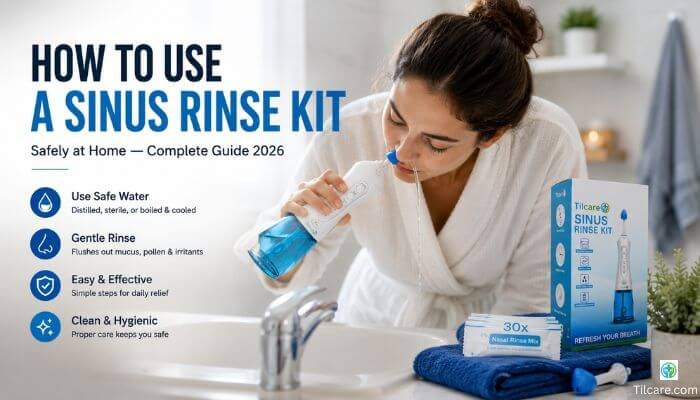
Nasal rinsing sounds simple until you’re standing over the sink with a bottle in hand, wondering if you’re doing it right. This guide covers how to use sinus rinse kit safely at home: the water rule that keeps rinsing safe, the actual step-by-step process, how often to do it, and how to pick a kit that fits your routine.
Table of Contents
What is a nasal or a sinus rinse kit?
A nasal rinse kit is a simple system designed to move saline solution through the nasal passages to help clear unwanted particles and mucus. Depending on the design, it may use gravity, manual pressure, or powered water flow to deliver the solution. Most complete kits include the rinsing device along with measured saline packets to make preparation easier. The idea is straightforward: saline enters one nostril, travels through the nasal cavity, and exits the other, carrying along dust, pollen, mucus, and other debris as it goes.
Rinse devices differ mainly in how they move the saline. Neti pots rely on gravity and positioning, squeeze bottles use hand pressure, and electric irrigators provide a controlled powered flow. Each approach has a different feel and level of control, so the better fit depends largely on how you prefer to handle the routine. If you’re deciding between the main options, our guide to nasal rinse vs. neti pot breaks down the differences in a simple side-by-side comparison.
Why nasal rinsing has become a daily habit for millions?
Sinus and nasal complaints are more common in the US than most people realize. According to CDC survey data, a notable share of American adults are told by a doctor each year that they have sinusitis, with the condition diagnosed more often in women than men. Separate national estimates put the number of adults dealing with sinus symptoms in the tens of millions.
Seasonal pollen, dust, dry indoor air, and changing environments are also common reasons people add rinsing to their routine. The timing can matter just as much as the rinse itself, particularly after spending time outdoors or during periods when airborne particles are more noticeable. Our practical guide to nasal rinsing during allergy season looks specifically at when rinsing may fit into that kind of routine.
The non-negotiable water safety rule
Before anything else: the water you use matters more than the device you use. The FDA advises rinsing only with distilled, sterile, or previously boiled water — never straight from the tap. Tap water is treated to be safe for drinking, but it isn’t filtered to the standard needed for nasal use, and trace organisms that are harmless in the stomach can survive in nasal passages. Safe water options include:
- Distilled or sterile water purchased at a store
- Tap water boiled for three to five minutes, then cooled to lukewarm
- Water passed through a filter rated to trap microorganisms (1 micron or smaller). This one rule is the difference between a safe daily habit and a genuine health risk, so it’s worth treating as a hard line rather than a suggestion.
How to use sinus rinse kit safely at home stepwise?
- Start by preparing both yourself and the device. Clean hands and a properly dried rinse bottle reduce the chance of introducing unwanted contaminants during the process.
- Prepare the saline solution using distilled, sterile, or boiled-and-cooled water, either with a pre-measured packet or your own mix.
- Position yourself above a sink with your head slightly angled so the solution can naturally enter one nostril and exit through the other without flowing toward the throat.
- Breathe through your open mouth and gently insert the spout into your upper nostril.
- Let the solution flow in and drain out the lower nostril. With an electric irrigator, start on the lowest pressure setting until you know what feels comfortable.
- Clear your nose gently, then repeat the process on the other side.
- Rinse and dry the device according to the manufacturer’s instructions. A gentle, steady flow works better than force. If a session causes real discomfort, ear pain, or the solution won’t drain, stop and try again with a lower setting or a different head angle next time.
How often should you rinse your sinuses?
There isn’t one schedule that suits every routine. Some people rinse regularly, while others only use their kit when the environment or their daily routine calls for it. Frequency can also change with travel, dry air, pollen season, or how often the device is normally used. For a fuller breakdown of different routines, see how often you should do a nasal rinse.
Making the saline solution right
Pre-measured saline packets are the simplest option because they remove the measuring step and keep each preparation consistent. If you prefer to prepare your own mixture, the water, salt, measurements, and mixing method all need to be handled carefully rather than estimated by eye. Our guide on how to make saline solution for nasal rinsing covers the ingredients, ratios, preparation steps, and common mistakes separately.
Cleaning and storing your device between uses
Device care should be part of the routine after each use, but the exact steps depend on whether you’re using a neti pot, squeeze bottle, or electric irrigator. Follow the instructions supplied with your device rather than assuming every design is maintained the same way. For the full device-specific routine, see how to clean a nasal irrigator.
Choosing the right nasal rinse kit for your needs
Fit matters as much as features. A simple manual option may be enough for occasional use, while someone building a regular routine may place more value on controlled flow, adjustable settings, included saline packets, portability, or an easier setup. If you’re still comparing formats and features, our best nasal rinse kit guide compares the main options and explains what to look for before choosing one.
For those who prefer a powered option, the Tilcare Sinus Rinse Kit offers Soft, Normal, and Pulse settings in a rechargeable design. It also includes 30 pre-measured saline packets and a microfiber towel, keeping the main parts of the routine together in one kit. The compact setup also makes it practical to keep the same routine at home or while travelling.
Frequently asked questions
Can I use tap water in a nasal rinse kit?
No, use distilled, sterile, or boiled-and-cooled water only, per FDA guidance.
How long does a nasal rinse take?
About one to two minutes per session, covering both nostrils.
Is an electric nasal irrigator better than a neti pot?
Neither is universally better; electric models offer adjustable pressure, while neti pots are simpler and rely on gravity.
Can children use a nasal rinse kit?
Only with pediatrician guidance on age-appropriate technique and equipment.
Does nasal rinsing help with allergies?
Many people use it as part of an allergy-season routine to help clear pollen and irritants, though it isn’t a substitute for medical care.
Swim Bag Essentials: Checklist for Swimmers, 2026