How to Clean a Nasal Irrigator? Neti Pot & Rinse Device Guide
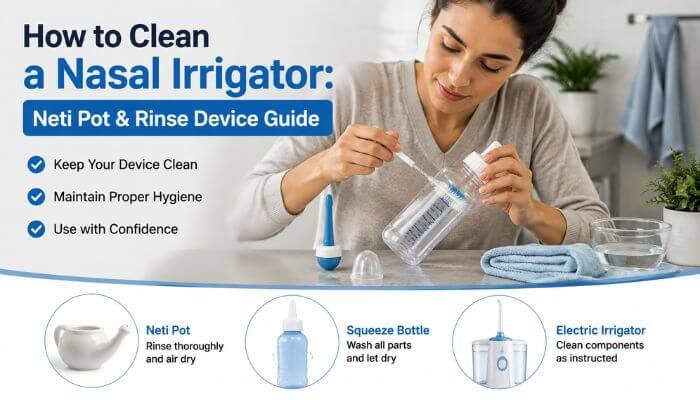
Looking for how to clean a nasal irrigator? If you’ve searched for how to clean a neti pot, the short version is that it comes down to rinsing it out, washing it properly, and letting it dry fully before you use it again. But that answer changes slightly depending on what kind of device you’re using. Neti pots, squeeze bottles, and electric irrigators aren’t built the same way, so the cleaning steps for each aren’t identical either. If you’re comparing the different types of nasal-rinse devices before choosing one, our guide to Nasal Rinse vs Neti Pot breaks down the main differences.
Table of Contents
How to clean a nasal irrigator after use?
The general routine looks fairly similar across most devices, even with the small differences between them. Start by emptying out any solution left inside, since letting it sit is one of the easier habits to slip into without noticing. From there, rinse the parts that came into contact with the solution, then clean them according to whatever instructions came with your specific device. Removable pieces, like caps, tips, or reservoirs, tend to get skipped more often than the main body, so it’s worth giving those the same attention. Once everything’s been cleaned, let the parts dry fully before putting them away. Skipping that step and storing things while still damp is one of the more common habits worth breaking.
How to clean a neti pot?
This is usually the simplest device to clean, which is part of why so many people stick with one. Start by emptying whatever solution is left in the pot. Rinse the inside thoroughly, then wash both the interior and exterior according to what the material calls for, glass and ceramic pots typically hold up fine with regular dish soap and warm water. The spout is worth a closer look, since residue tends to settle there more than anywhere else on the pot. Once it’s clean, set it somewhere it can air dry completely, upside down works well, before using it again.
How to clean an electric nasal irrigator?
Electric devices have more going on than a neti pot, so there’s more to check. Depending on the design, you’re usually dealing with a main reservoir, tubing, a nozzle or tip, and sometimes additional removable parts. Each piece can accumulate residue differently, which is why following the specific instructions for your device matters more here than it does with something as simple as a neti pot. If you use an electric option such as the Tilcare Sinus Rinse Kit, pay particular attention to the removable components and follow the cleaning instructions supplied with the device, since electric models can vary in how their parts detach and reassemble.
How to dry and store a nasal rinse device?
Cleaning only solves half the equation, drying and storage matter just as much. Letting removable parts air dry fully, rather than wiping them down and packing them away, gives moisture a chance to actually leave the equipment. Avoid sealing damp components inside a closed bag or drawer, since that just traps moisture instead of letting it evaporate. Keeping all the pieces together in one spot also makes it less likely you’ll misplace a small part between uses. If your device has parts that need periodic replacing, following the manufacturer’s guidance on that keeps the equipment working the way it’s supposed to.
Common nasal irrigator cleaning mistakes to avoid
A few habits show up more often than others. Wiping down just the outside of a device while skipping the parts that actually touched the solution is a big one. So is leaving leftover solution sitting inside between uses instead of emptying it right away. Storing a device while it’s still wet, especially in a closed container, is another common slip.
Removable components get overlooked more than people realize, and reaching for cleaning products the manufacturer doesn’t recommend can do more harm than good. It’s also worth remembering that not every nasal-rinse device cleans the same way, what works for a neti pot won’t necessarily apply to an electric irrigator, so checking the actual instructions for your device is worth the extra minute.
Frequently Asked Questions
How often should you clean a neti pot?
After every use, along with a more thorough clean on a regular basis depending on how often it’s used.
How do you clean a nasal irrigator?
Empty any leftover solution, clean the components according to the device’s instructions, and let everything dry fully before storing.
Can you clean an electric nasal irrigator the same way as a neti pot?
Not exactly. Electric models have additional parts like tubing and reservoirs that need their own attention, so it’s worth following the specific instructions for your device.
How should you store a nasal rinse device after cleaning?
Once fully dry, store the components together somewhere open enough for airflow, rather than sealed in a closed container.
How do you clean a nasal rinse bottle?
Empty it out, wash it with warm water according to the material it’s made from, and let it air dry completely before the next use.
For a full walkthrough on using your device correctly from the start, our guide on how to use a nasal rinse kit safely at home covers the complete process. The CDC’s guidance on nasal rinsing device safety is also worth a look if you want more detail on general device-care practices.

How to Make Saline Solution for Nasal Rinsing? Ingredients, Ratios & Common Mistakes