Best Derma Roller for Face: How to Choose the Right One?
Which is the best best derma roller for face? Face rollers all look pretty similar on a product page, a handle, a drum, a lot of tiny needles. The differences that actually matter are quieter than that: needle length, how the roller head is built, how comfortable the handle feels, and whether the tool suits the part of your face you plan to use it on.
This guide sticks to the buying side, so you can pick a roller that fits your skin and your routine without guessing from a spec sheet.
Quick Answer
- Choose for facial use: Look for a compact roller head, evenly spaced needles, a comfortable grip, and a design that gives you good control.
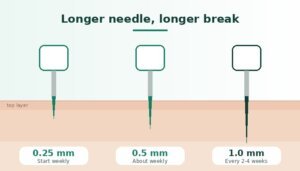
- Consider needle size: Home-use facial rollers commonly range from 0.25 mm to 0.5 mm, with shorter lengths generally being the starting point for beginners.
- Check build quality: Smooth, uniform needles, a stable roller head, and a sturdy handle are important details to check before buying.
- Match the roller to your goal: Facial skin, facial hair, scalp, and body use can call for different roller designs and considerations.
- Keep expectations realistic: A home roller is part of a skincare routine and should not be viewed as a replacement for professional procedures.
- Follow the product instructions: The manufacturer’s guidance should take priority when deciding where and how to use a specific roller.
Table of Contents
What makes a roller suitable for facial use?
The face is a different job from the scalp or body. Skin is thinner in some spots and sits closer to bone in others, so a roller that glides well over a cheek can feel harsh along the jawline or forehead. A good face roller has a compact drum that can turn tight corners, needles that are evenly spaced and uniform in length, and a handle that lets you control pressure rather than leaning into it. If a roller feels clumsy in your hand in the first few passes, that’s usually a sign the handle or drum size isn’t right for facial work.
What size derma roller for the face?
This is the question most people start with, and the honest answer is that it depends on your experience and the area you’re working in. Home-use rollers sold for facial use generally fall between 0.25 mm and 0.5 mm, with beginners usually starting at the shorter end. Anything longer than that is designed for professional settings, and the FDA notes that devices with deeper needle penetration are regulated as medical devices. Here’s a simple way to think about it by area:
| Facial Area | Skin Feel | General Approach |
| Forehead | Thin, close to bone | Shorter needles, light passes |
| Cheeks | Broader, a bit more cushion | Comfortable for most beginner sizes |
| Jawline and chin | Contoured, uneven surface | Shorter needles, slow controlled movement |
| Around the nose and mouth | Delicate, hard to reach | Small-head roller or extra care |
| Under-eye area | Very thin | Most rollers aren’t meant for this area |
Your roller’s own instructions should always take priority over a general guide like this, since the right frequency and area coverage depends on the specific needle length printed on the product.
Derma roller for loose skin: keeping expectations realistic
Loose or less firm skin is one of the most common reasons people look into face rollers, so it deserves a straight answer. A home derma roller is a surface-level tool, and it isn’t a substitute for professional procedures when someone is looking for dramatic changes in firmness. What it can be is one part of a regular skincare routine for people who like the ritual of it and want something that works alongside their existing products. If loose skin is a real concern for you, a dermatologist can walk you through what’s actually realistic for your situation, and a roller works better as a supporting habit than a stand-alone fix.
Build details worth checking before you buy
Needle length gets all the attention, but a few smaller details tell you a lot about quality. Look at the needle material and finish, since smooth, uniform needles feel noticeably different from rough ones. Check how the drum is attached to the handle, because a wobbly connection makes even pressure harder to maintain. Handle length and grip matter too, especially if you plan to roll in front of a mirror for several minutes at a time. A protective case is also a small but useful sign that the manufacturer expects the roller to be stored properly between uses.
Matching the roller type to your routine
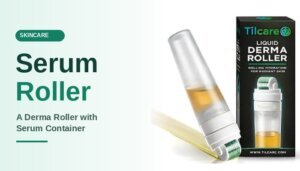
Standard rollers suit people who like keeping each step of their routine separate and are comfortable applying products by hand. If you’d rather streamline things, a roller with a built-in reservoir changes the workflow, and our breakdown of the serum roller explains how that mechanism works and who it suits.
If your focus is on facial hair or the scalp rather than skin, the sizing logic is different, and our guide to the best derma roller for hair growth covers what to look for there instead. If you’re brand new to rolling and haven’t settled on a routine yet, start with our overview of how to use a derma roller before you pick a size.
Common buying mistakes
Going straight for the longest needle available is the most frequent one, usually based on the idea that longer means better. It doesn’t, and it often means a rougher experience and a longer wait between sessions. Buying purely on price is another trap, since very cheap rollers can have uneven needles that tug rather than glide. Ignoring the handle design is easy to do online but hard to forget once the roller arrives. And buying a roller meant for one purpose and using it for another, like a scalp-focused roller on facial skin, tends to end in disappointment.
Where a face-friendly option fits?
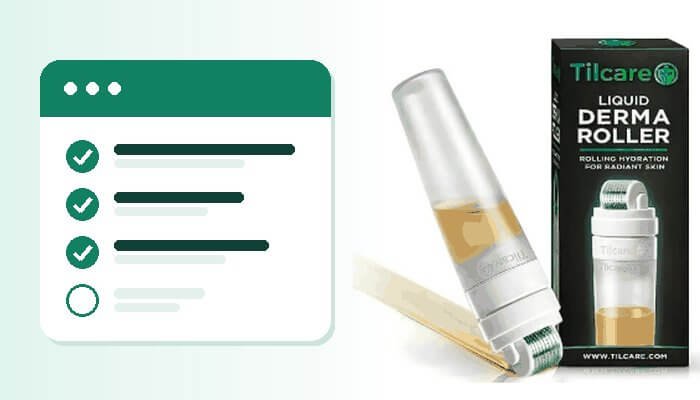
If you want something that handles the rolling and serum application in one tool, the Tilcare serum derma roller is built around that reservoir design, which makes it a practical pick for facial routines where you already use a lightweight serum. The FDA’s consumer guidance on microneedling devices explains how at-home tools differ from professional ones, which is a useful background before you choose a roller size.
Frequently Asked Questions
What is the best derma roller for face use?
One with uniform needles, a compact drum that handles facial contours, and a needle length suited to your experience level. Beginners usually do better starting on the shorter end.
What size derma roller for the face is best for beginners?
Most home-use facial rollers fall between 0.25 mm and 0.5 mm, and beginners generally start with the shorter lengths and move up only if their skin handles it comfortably.
Can a derma roller for loose skin replace professional treatments?
No. A home roller works as part of a routine, not as a replacement for professional procedures.
Can I use my face roller anywhere on my face?
Not necessarily. Delicate areas like under the eyes are usually best avoided, and the manufacturer’s instructions will tell you where the roller is meant to be used.
How do I know if a roller is good quality?
Smooth, evenly spaced needles, a stable connection between the drum and handle, and a comfortable grip are the clearest signs.
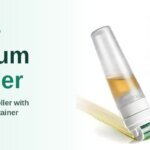
Serum Roller - A Derma Roller with Serum Container