Electric Nasal Rinse vs Neti Pot: Best for you in 2026?
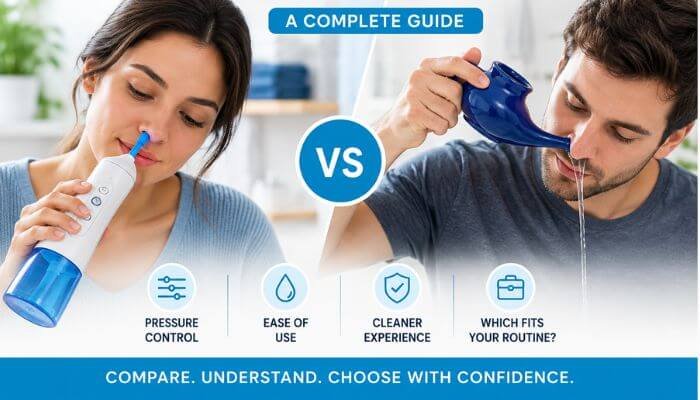
Is it electric nasal rinse vs neti pot? Before comparing different devices, it is important to understand the correct rinsing technique, water safety, and basic routine. Our guide on how to use a sinus rinse kit safely at home covers the complete process step by step.
But the tool people reach for isn’t always the same. Some stick with the traditional neti pot they’ve used for years, while others have switched to an electric nasal irrigator. Neither one is universally “better,” but they work differently enough that picking the right one can make the whole routine feel a lot less like a chore.
Quick Overview
Electric nasal irrigators and neti pots both use saline rinsing to clean the nasal passages, but they deliver the experience differently. Neti pots rely on gravity and a traditional pouring method, while electric nasal irrigators provide controlled flow and adjustable pressure settings. The right choice depends on your routine, comfort preference, and how often you plan to rinse.
Table of Contents
How an electric nasal rinse works?
An electric irrigator does the same basic job but takes the manual pouring out of the equation. A small motorized pump pushes the saline solution through at a steady, controlled flow, and many models let you adjust the pressure to something gentler or stronger depending on preference. FDA guidance on safe water for nasal rinsing. Because the device controls the stream, there’s less guesswork involved in head positioning, which some users find easier to get used to, especially early on.
How a neti pot works?
A neti pot relies entirely on gravity. You tilt your head to the side, pour a saline mixture in through one nostril, and let it flow out the other. There’s no motor, no batteries, and no settings to adjust. That simplicity is part of the appeal. It’s straightforward, doesn’t require charging, and works the same way it has for generations. The tradeoff is that flow rate and pressure depend entirely on how you tilt your head and how fast you pour, which takes a bit of practice to get comfortable with.
Difference between nasal rinses and neti pots
| Feature | Neti Pot | Electric Nasal Irrigator |
|---|---|---|
| Power source | None — gravity-fed | Battery or plug-in motor |
| Setup effort | Mix saline, tilt head to pour | Fill reservoir, press button |
| Flow control | Depends on pour speed and head angle | Adjustable pressure settings |
| Learning curve | Takes a few tries to get angle right | Easier for first-time users |
| Noise | Silent | Low hum while running |
| Portability | Lightweight, no charging needed | Bulkier, needs charging/power |
| Maintenance | Rinse and air-dry after use | Rinse components, occasional battery/charge check |
| Best for | Simple, no-frills daily use | Consistent pressure, easier technique |
| Travel-friendly | Yes | Only compact/travel-specific models |
Comfort and learning curve
People who’ve used a neti pot for years often say the technique becomes second nature, but there’s usually an adjustment period at the start. Head angle matters a lot, and it’s easy to tilt too far or not far enough the first few tries. Electric irrigators tend to smooth that learning curve out since the pump handles the flow consistently. That said, some people still prefer the slower, more deliberate feel of a neti pot over the buzz of a motor, so it comes down to personal preference more than one method being objectively simpler.
Portability and daily use
This is where the two options really start to differ. A neti pot is lightweight, has no electronics, and can go straight into a toiletry bag without a second thought. There’s nothing to charge and nothing that can run out of battery mid-trip. Electric irrigators are bulkier by comparison and usually need to be charged or plugged in, which makes them a bit less convenient for travel unless the model is specifically built to be compact. For a daily routine at home, that difference matters less, but it’s worth considering if you’re someone who travels often or wants something you can toss in a bag without thinking twice.
Noise and convenience
Electric irrigators aren’t loud, but they do make a low humming sound while running, which some people notice more than others, especially if they’re used to the silence of a neti pot. On the convenience side, though, many electric models offer more consistent output with less mess, since the flow is steady rather than dependent on how quickly the pot is tilted. Neti pots, on the other hand, sometimes take a couple of tries to get positioning right before the flow feels natural.
Electric nasal rinse vs. neti pot – which is best for you?
Neither option is the “correct” choice for everyone. People who like a simple, no-frills approach with nothing to charge or maintain electronically tend to stick with a neti pot. Those who want more control over pressure, or who find the pouring technique tricky to get right, often lean toward an electric option instead. Frequency of use plays a role too. Frequency of use plays a role too. Someone rinsing daily as part of a regular routine might appreciate the consistency an electric device offers, while someone using it occasionally may prefer the simplicity of a manual option.
If you are comparing complete kits rather than individual methods, our guide on the best nasal rinse kit for congestion and allergy relief covers the features that matter most, including pressure settings, saline packets, cleaning, and portability. For anyone assembling a full sinus care routine rather than relying on a single tool, a sinus rinse kit that includes both a manual option and pre-measured saline packets can be a practical middle ground, giving you the simplicity of manual rinsing without having to mix solution from scratch each time. It’s less about replacing one method with another and more about having what you need on hand regardless of which technique you prefer that day.
Looking for a Complete Sinus Rinse Kit?
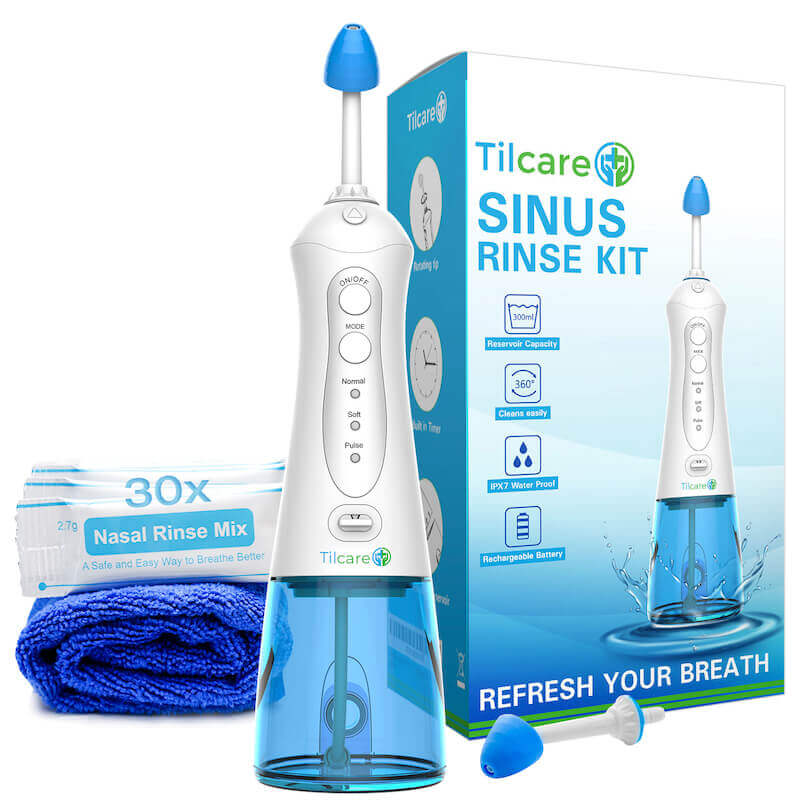
The Tilcare Sinus Rinse Kit combines a rechargeable electric nasal irrigator, adjustable pressure settings, saline packets, and essential accessories in one complete setup for your daily nasal rinse routine.
View Sinus Rinse KitConclusion
The real difference between a neti pot and an electric nasal irrigator isn’t which one works “better” in a general sense, it’s which one fits how you actually use it. If simplicity, portability, and zero maintenance matter most, a neti pot still holds up well. If consistent pressure and an easier learning curve matter more, an electric option is worth the extra bulk. Trying both, if that’s realistic, is often the fastest way to figure out which one actually sticks as part of your routine.

Best Nasal Rinse Kit: Comparison & Buyer’s Guide 2026