
Is Ear Wax Removal Safe? Risks You Should Know (2026 Guide)
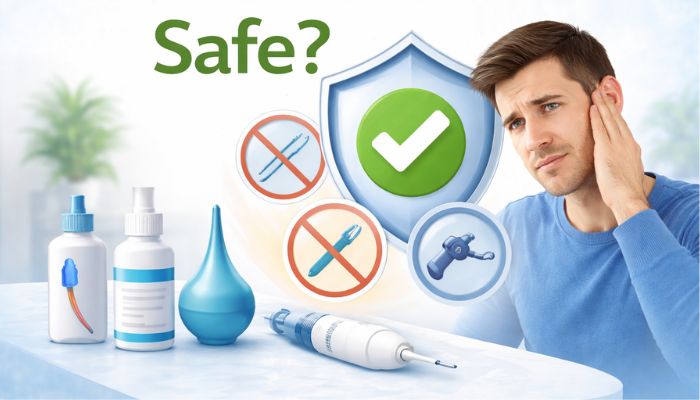
Ear wax removal is generally safe, but only when it’s done carefully. Most problems don’t come from the wax itself, they come from how people try to remove it. Using the wrong method, applying too much pressure, or cleaning too often can quickly turn a simple issue into something worse. Understanding the risks helps you avoid unnecessary damage.
Table of Contents
Is ear wax removal safe at home?
In most cases, yes. If the buildup is mild and your ears are otherwise healthy, simple at-home methods usually work without any issues. The outcome depends less on the tool and more on how gently and appropriately it’s used. However, if there’s pain, infection, or a history of ear problems, even basic removal attempts can make things worse. For more read the detail guide on how to remove wax stepwise.
What are the common risks of earwax removal?
Knowing what can go wrong makes it easier to avoid mistakes:
- Wax pushed deeper into the ear — often caused by inserting tools too far, turning a minor blockage into a more stubborn one
- Irritation inside the ear canal — repeated contact or scraping can leave the skin dry and sensitive
- Temporary dizziness — water that’s too hot or too cold can briefly affect balance
- Over-cleaning — removing wax too often strips away its natural protective layer and can lead to more buildup over time
Methods that are generally safe
Some approaches are considered low-risk when done properly:
- Softening the wax first using drops
- Rinsing gently with body-temperature water
- Using tools designed specifically for controlled ear wax removal
Methods to avoid
These methods are more likely to cause harm than help:
- Cotton buds (they tend to push wax deeper rather than remove it)
- Sharp or improvised objects
- High-pressure water flushing
- Ear candling (no proven benefit and a real risk of burns)
- Cleaning too frequently when no symptoms are present
Who should not try earwax removal at home?
At-home removal is not suitable for everyone. Avoid it if you have:
- A history of ear surgery
- An active infection or ongoing ear pain
- A perforated or previously damaged eardrum
- Persistent discharge or fluid from the ear
- A professionally fitted hearing aid (cleaning should be handled by a specialist)
If any of these apply, it’s best to seek medical advice before attempting anything.
When to see a doctor?
Skip home treatment and get professional help if you notice:
- Sudden or significant hearing loss
- Severe or worsening ear pain
- Fluid, discharge, or unusual smell
- No improvement after a few days of using drops
- Dizziness or balance issues alongside a blocked feeling
These signs often point to something beyond simple wax buildup.
How to reduce risk when cleaning your ears?
For routine visible wax only, an ear wax removal tool with camera may help users see more clearly compared with cleaning blindly. Avoid using any tool if you have pain, discharge, dizziness, ear tubes, infection symptoms, or sudden hearing loss. A few simple habits can make a big difference:
- Soften the wax before trying to remove it
- Avoid inserting anything into the ear canal
- Only clean when symptoms are present
- Use proper tools instead of improvised solutions
- Stop immediately if you feel pain or pressure
Frequently Asked Questions
Is earwax removal dangerous?
Not when done properly. It becomes risky when incorrect methods are used or underlying issues are ignored.
Can you damage your ear by cleaning it?
Yes. Using too much force or inserting objects can scratch the canal or push wax deeper.
Is it safe to flush ears at home?
Gentle irrigation with body-temperature water is usually safe for healthy ears, but avoid strong pressure.
How often should you remove earwax?
Only when symptoms appear. Healthy ears generally manage wax on their own.

How to Know If You Have Too Much Ear Wax?


)
)