
Blocked Ear from Wax? How to Fix It Fast at Home (2026 Guide)
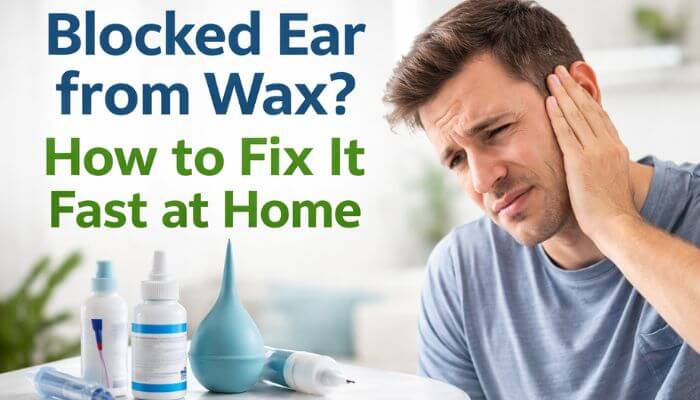
A blocked ear from wax can feel sudden and uncomfortable, often after a shower, a swim, or even without warning. Sounds may seem muffled, and the ear can feel full or pressured. In many cases, this happens when existing wax shifts or reacts to moisture rather than new wax forming.
If you need quick relief, there are safe ways to manage it at home, but it’s important to understand what’s actually causing the blockage before taking action.
Table of Contents
Why does your ear feel blocked suddenly?
A blocked ear doesn’t usually mean something new has developed, it’s often caused by changes in wax that’s already present. Here are the most common reasons:
- Wax swelling: Ear wax can absorb moisture when water enters the ear during a shower or swim. As it takes in that moisture, it expands slightly and occupies more space inside the ear canal. Even a small change in size can reduce airflow and make sounds feel dull or distant.
- Sudden wax shift: Your ears naturally move wax outward over time. Simple actions like chewing, talking, or even sleeping on one side can shift wax inside the canal. If it moves into a narrower area or across the passage, it can suddenly block sound creating that “plugged” sensation.
- Trapped water: Water can sometimes remain in the ear after bathing or swimming. When this happens alongside existing wax, it can worsen the feeling of blockage and make hearing temporarily less clear.
Quick signs it’s ear wax
If you face any of the above issues, it is mostly due to earwax, which is temporary and can be cleared using ear drops or removal tools. You can also use a combination — first take some ear drops and let them settle. They will loosen and soften the wax, which can then be carried out easily using an irrigation tool. For a detailed step-by-step method, refer to this guide.
What not to do when your ear is blocked?
- Avoid cotton buds: Cotton swabs do not help extract wax they push it further back instead. Source: NHS.
- Do not forcefully clean the ear: It may cause damage to the ear canal.
- No sharp or hard objects: Inserting these may damage the ear canal skin
- Avoid over-cleaning: Ear wax occurs naturally and safeguards the ear passage from foreign particles, do not strip it away unnecessarily.
- Act during a worsening situation: Visit a doctor if you notice discharge or experience severe ear pain
When it’s not just wax?
It is important to recognize when the issue goes beyond earwax so it can be handled safely:
- Pain: If you feel sudden pain that is increasing and cannot be managed, visit a doctor it is likely not caused by earwax
- Infection: Discharge from the ear or a flow of fluid is a sign that something is wrong likely an infection and is not related to earwax
- Sudden hearing loss: Hearing loss caused by earwax develops gradually, not suddenly, and is always temporary. If you feel no relief even after using ear drops or an irrigation tool, consult a doctor it may not be ear wax at all.
How to prevent sudden ear blockage?
Most blocked ears from wax are avoidable with a few simple habits. Nothing complicated, just small adjustments to your routine that keep wax from building up or shifting at the wrong time.
- Keep moisture out after water exposure – After a shower or swim, tilt your head to each side and let the water drain out naturally. You can also use a clean towel corner to dry the outer ear gently — never insert it inside. Trapped moisture is the most common trigger for wax swelling, and this one habit alone makes a real difference.
- Use ear drops occasionally as maintenance – If you are prone to wax buildup, using a few drops of olive oil or a pharmacy-grade ear drop once or twice a week keeps the wax soft. Soft wax moves out naturally through jaw motion it never gets the chance to harden and block.
- Protect your ears while swimming – A basic silicone earplug while swimming stops water from entering the canal entirely. This is especially useful if you swim regularly or have a history of blockages after water exposure.
- Don’t over-clean – Cleaning too frequently strips the ear of its natural wax layer, which causes the gland to overproduce leading to more buildup, not less. Clean only when you genuinely feel discomfort or reduced hearing.
How to fix a blocked ear from wax at home?
If your ear suddenly feels blocked, the goal is to loosen the wax first, then help it move out naturally. The approach depends on how severe the blockage feels.
- Start with ear drops – This is usually the easiest and safest place to begin. Tilt your head and place a few drops into the affected ear, then stay still for a few minutes so the liquid can reach deeper into the canal. The purpose here isn’t to remove the wax instantly—it’s to soften it. Once softened, the wax may begin to shift on its own or become much easier to remove later. If you don’t have drops, a small amount of oil can serve a similar purpose.
- Use a removal tool if needed – If the blockage appears to be from visible wax near the outer ear canal, an ear wax removal kit for visible wax buildup can help with careful at-home cleaning. Do not use any tool if you have ear pain, discharge, dizziness, ear tubes, a suspected infection, or sudden hearing loss. For a full comparison, see: ear drops vs ear wax removal tools.
- Combine both methods for faster relief – For more stubborn blockages, combining both steps usually works best. Start by softening the wax, then follow with a gentle removal method. This two-step approach reduces resistance and makes the process smoother and more effective. If you want a detailed walkthrough, follow this guide: how to remove ear wax safely at home.
How Often Should You Clean Your Ears? 2026 Guide


)
)