Swim Bag Essentials: Checklist for Swimmers, 2026
What are the Swim Bag Essentials? Most swimmers spend more time thinking about what happens in the water than what happens around it. The bag gets packed on autopilot: goggles, cap, towel, and everything else gets remembered only when it is missing. A well-packed swim bag does not just cover the swim itself. It covers the warm-up, the cool-down, the post-pool routine, and the commute home. Getting that list right once means not thinking about it again.
Table of Contents
What are the Swim Bag Essentials?
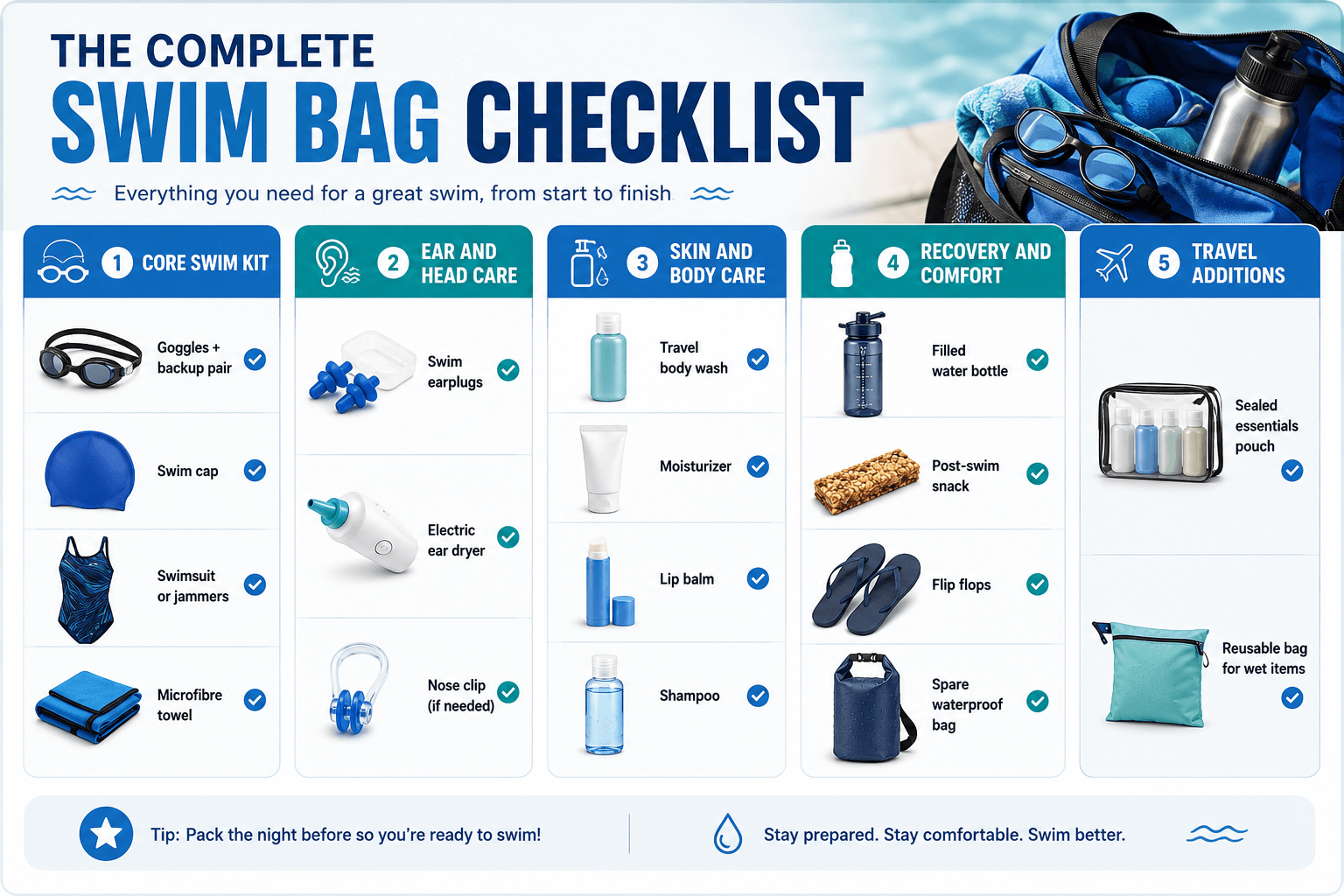
Below are the essentials that every swimmer must include:
The core swim kit
These are the items that make the session possible. None of them are optional, and all of them have qualities worth paying attention to beyond just having one.
- Goggles – should fit without leaving marks after a 45-minute session. A pair that creates pressure or leaks slightly is a distraction that compounds across every lap. Keep a backup pair in the bag for sessions where a strap snaps or a lens fogs beyond use.
- A swim cap – reduces drag and keeps hair out of goggles. Silicone caps last significantly longer than latex and are easier to put on without pulling hair. For open-water swimmers, a brightly colored cap adds visibility that matters more than most people think.
- Swimsuit or jammers – that have been rinsed and dried properly between sessions last longer and hold their shape better. Chlorine degrades fabric faster when it is left to dry on its own without a rinse — a habit worth building from the first session.
- Towel – a microfibre version dries faster, weighs less, and takes up a fraction of the space of a standard cotton towel. For swimmers packing a bag that also has to fit in a locker, the size difference is meaningful.
Ear and head care
The changing room is where most swimmers reach for a cotton swab — and it is the one habit worth replacing before anything else. Water sitting in the ear canal after a session is not just uncomfortable. According to the CDC, swimmer’s ear sends approximately 2.4 million Americans to the doctor every year, with the majority of cases traced back to moisture that was not properly cleared after water exposure.
- Swim earplugs belong in the bag as a prevention measure during the swim itself. They reduce how much water reaches the canal while you are in the water — but they do not address what remains when you get out. Silicone options that mold to the outer canal opening tend to stay in place more reliably than foam during flip turns and open-water swimming.
- An electric ear dryer covers the aftercare step that earplugs cannot. The Tilcare Electric Ear Dryer uses gentle warm airflow through soft interchangeable tips positioned at the ear opening — nothing inserted, nothing in contact with the canal. It is USB rechargeable, runs quietly, and sits easily at the top of a bag rather than buried at the bottom where it never gets used. For anyone building a post-swim routine that does not involve swabs, this is the practical alternative that actually fits into a bag and gets used consistently. Browse the full electric ear dryer range for available options.
- Nose clip — worth having for anyone doing regular flip turns or transitioning between pool and open-water swimming where nasal water entry is more frequent.
Skin and body care after the pool
Chlorinated water strips natural oils from skin and hair with consistent exposure:
- Gentle body wash — something without heavy fragrance that rinses clean quickly in a pool shower. Keeping a travel-size version in the bag means the pool shower gets used properly rather than skipped in a rush.
- Moisturizer — applied while skin is still slightly damp after showering, locks in moisture more effectively than applying to completely dry skin. A small tube in the bag makes this a two-minute step rather than something that waits until getting home.
- Lip balm — pool air and chlorinated water dry lips faster than most swimmers notice until the effect is already significant. A basic SPF lip balm covers both pool and outdoor open-water sessions.
- Shampoo or swimmer’s shampoo — regular shampoo removes chlorine adequately for most swimmers. Dedicated swimmer’s shampoo addresses copper deposits that cause a greenish tint in lighter hair, which is a consideration for competitive swimmers training at high volume.
Recovery and comfort items
- Water bottle — hydration during and after a swim session is easy to overlook because the water surrounding the swimmer creates a false sense that thirst is not building. It is. A filled bottle in the bag means it actually gets used rather than purchased at the facility or skipped.
- Snack — a swim session burns calories at a rate that makes post-swim hunger arrive quickly and intensely. A simple snack in the bag, fruit, a bar, anything that travels without refrigeration, covers the gap between the pool and the next proper meal.
- Flip-flops — pool decks and changing room floors are shared surfaces. Wearing footwear between the pool and the changing area is a basic hygiene habit that costs nothing to maintain.
- Spare plastic bag — a wet swimsuit, cap, and towel need to travel home in something. A reusable waterproof bag or a simple zip-lock keeps wet items separate from everything else in the bag.
Travel and storage considerations
The swimmers who pack most efficiently are the ones who stopped repacking from scratch before every session. A sealed inner pouch containing the non-negotiables- goggles, cap, earplugs, ear dryer, travel wash- transfers between bags in one move and is always ready without a checklist.
For swimmers managing ear care across different water types and conditions- pool chlorine, ocean saltwater, freshwater understanding which tool handles which part of the process makes the routine cleaner. The comparison between prevention and aftercare approaches is covered in full in the guide on ear dryer vs earplugs for swimming. For the specific post-session drying routine that works without cotton swabs, the guide on how to dry ears after showering without cotton swabs covers the steps in detail.
Frequently Asked Questions
What should always be in a swim bag?
Goggles, swim cap, towel, earplugs, and an ear drying method — these cover the swim itself and the post-swim routine that affects comfort between sessions.
Do I need earplugs and an ear dryer?
They serve different roles: earplugs reduce water entry during the swim, while an ear dryer clears residual moisture afterward, so both have independent value in a regular swimming routine.
How do I keep my swim bag from smelling?
Rinse wet items before they go in the bag, use a waterproof inner pouch for anything still damp, and air the bag out between sessions rather than leaving it sealed.
Is a microfibre towel better than a regular towel for swimming?
For bag packing purposes, yes, it dries faster, weighs significantly less, and takes up a fraction of the space, which matters when the bag also carries everything else on this list.

How to dry ears after shower? No cotton swabs (2026)