
Singing Mask: What It Is and Who It Is For (Complete Guide 2026)
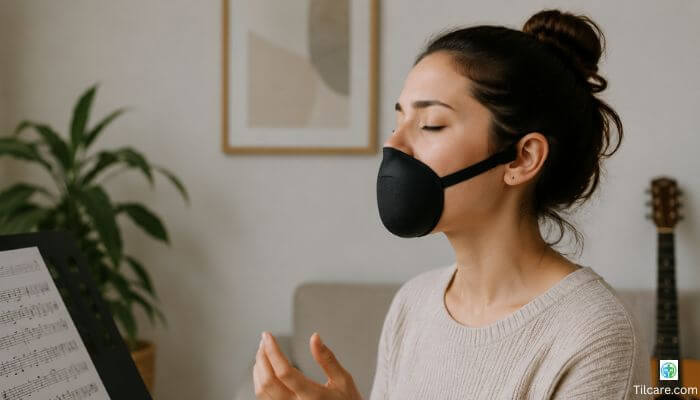
If you have ever wanted to run through a song at 10 p.m. without a neighbour banging on the wall, you have probably searched for a singing mask at some point. It sounds like an odd piece of gear until you actually need it, and then it makes complete sense. This guide breaks down what a singing practice mask really is, how it works, and the kind of singer it actually suits, so you can decide whether it belongs in your practice routine or not.
Singing practice mask is a wearable tool that reduces vocal sound during practice, allowing singers to train quietly in apartments or shared spaces while maintaining basic vocal control. It works by muffling sound through a padded chamber but may slightly restrict airflow and alter voice feedback. It is mainly useful for beginners and home-based singers, while lighter alternatives like vocal dampeners offer more comfort for longer sessions.
Table of Contents
What is a singing practice mask?
A singing practice mask is a wearable device that muffles the sound of your voice while you sing, so you can practise without filling the whole house or building with noise. It usually covers your nose and mouth and holds a small chamber of foam or padded material that absorbs part of the sound coming out of you.
It is not a medical mask, a dust mask, or a costume piece, even though some of them look similar from the outside. The whole point is volume control, letting you train at a more private level while you still hear enough of yourself to stay on pitch. For anyone serious about quiet singing practice, it is one of the first tools that tends to come up.
How does a singing practice mask work?
The mask works by trapping and absorbing the sound energy that would normally travel straight out into the room. As you sing, the air and sound move into the padded chamber, where the material soaks up a portion of the volume before it escapes. You do not get silence; you get a noticeably softer version of your voice that carries far less through walls and doors.
You still hear yourself clearly because a lot of that feedback reaches your ears through bone conduction inside your own head, which is why singing in a mask can feel surprisingly normal once you adjust. The trade-off is airflow, since the same padding that muffles sound also sits between you and the open air, so breathing feels a little more contained than usual.
Why singers use a practice mask?
Most people reach for a singing mask for one simple reason: they cannot make noise where they live, but they still want to improve. Apartment singing practice is the classic case where shared walls turn every loud note into a potential complaint. Students in dorms, parents who only get free time after the kids are asleep, and anyone with light-sleeping housemates all run into the same wall.
There is also the confidence angle, because plenty of beginners feel self-conscious being overheard, and a mask gives them a private space to make mistakes without an audience. Used this way, it removes the excuse not to practise, which is honestly half the battle for most developing singers.
Comparison: singing practice mask vs vocal dampener
This is where the labels matter, because vocal dampener vs singing mask is a real comparison and not just two names for the same thing. A singing practice mask is usually a fuller cover that muffles sound through bulk and padding, which works but can feel heavy and restrict your breathing during longer sessions.
A vocal dampener is designed more specifically around the way singers actually train, often with a nose-free, hands-free shape that supports warm-ups, scales, and rehearsals without smothering your airflow. The mask leans toward maximum muffling; the dampener leans toward practical, repeatable practice.
Who should and should not use a singing practice mask?
A singing mask for beginners makes a lot of sense if you live somewhere with thin walls, practise at unsociable hours, or feel too shy to be heard while you are still finding your voice. Dorm students, apartment dwellers, and anyone sharing a small space tend to get the most out of it, because the alternative is often not practising at all.
On the other side, it is not for everyone. If you have any breathing difficulty, feel uneasy with something covering your face, or need to hear your true, unfiltered tone for serious technique work, a mask can get in the way more than it helps. Singers preparing for recording or precise pitch training usually want clearer feedback than a muffling device can give, so for them, it is a limited tool at best.
Key benefits
- The biggest benefit is consistency, because a singing mask turns “I cannot practise right now” into “I can practise quietly whenever I want”.
- It protects your relationship with neighbours and housemates, which matters more than people admit.
- It also lowers the pressure of being overheard, so you are more willing to push into difficult notes and experiment without worrying who is listening.
- For travelling singers, the portability is a real plus, since you can slip it into a bag and keep your routine going in hotels or unfamiliar rooms.
None of this replaces real open practice, but it keeps your momentum alive when full-volume singing is not an option.
Limitations you should know
Being honest matters here because a singing mask is not magic, and it has clear downsides. The sound it gives you is muffled, so the feedback you hear is not a perfect picture of your real tone, which can quietly affect how you judge your technique. Breathing feels more restricted, and longer sessions can get warm and a little damp inside the chamber, which is not pleasant.
It also does not silence you completely, so very loud belting can still carry through walls even with the mask on. And because it changes how singing feels, some people end up adjusting their technique to suit the mask rather than the other way round, which is something to stay aware of.
Alternatives to singing practice masks
If a full mask feels like too much, you have options. The most balanced alternative for most singers is a vocal dampener, such as the one Tilcare makes, which is built around singers and tends to feel lighter and easier to breathe in than a bulky mask while still keeping your practice quiet. Beyond gear, quiet techniques help too, including straw phonation, gentle humming, and lip trills, all of which let you train control at low volume with nothing covering your face.
Soundproofing a small corner of a room or booking a local practice space are bigger commitments, but they remove the volume problem entirely. For a full plan that ties these together, the pillar guide on how to practise singing quietly at home is the best place to start.
Frequently asked questions
Does a singing practice mask actually make you quieter?
Yes, it muffles and absorbs sound to lower your volume, though it softens your voice rather than silencing it.
Can a singing mask damage your voice?
Not on its own, but muffled feedback can push you to strain, so stay aware of how you feel.
Is a singing mask or a vocal dampener better for apartment practice?
A vocal dampener usually feels more comfortable and breathable, while a mask leans toward heavier muffling.
Is a singing mask good for beginners?
Yes, it removes the fear of being overheard; just balance masked practice with some open singing.
How long can you sing with a practice mask on?
Shorter sessions are best, since warmth and restricted airflow build up, so take breaks and check your real tone.

Breast milk storage guidelines: Every mom should know?


)
)