
Best Vocal Dampener for Singing Practice: Buyer’s Guide
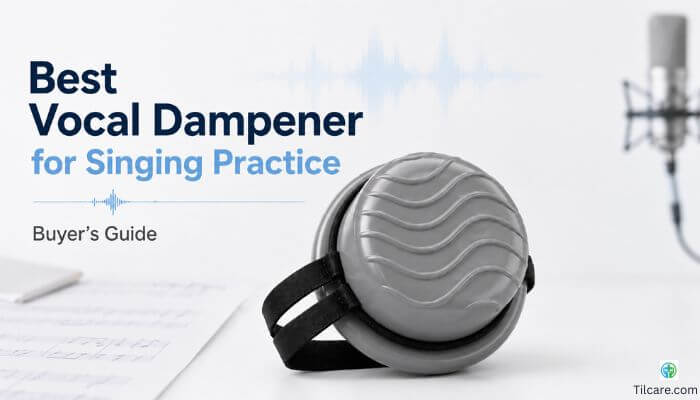
For every singer, equipment like a vocal dampener plays a vital role in improving singing performance because it gives you the freedom to practice at a high pitch without disturbing others. But which is best vocal dampener for singing practice? The differences between a well-designed dampener and a poorly made one become obvious fast. Here in this buyer’s guide, you will know what actually matters when you’re choosing one for singing practice.
Quick Summary
The right vocal dampener should make private singing practice more practical without unnecessarily restricting breathing or movement. This guide explains what to compare before buying: a mouth-only, nose-free fit, supportive foam that holds its shape, useful sound reduction, a secure hands-free strap, and easy cleaning. Tilcare’s Vocal Dampener combines these practical features for singers who want a more private way to warm up, rehearse, and practise in shared spaces.
Table of Contents
Does it cover the mouth only, or the whole face?
Many dampeners on the market were built for gaming headsets or streaming setups, where the goal is muffling ordinary speech. Those designs often seal over the nose and mouth together, which restricts airflow in a way that becomes uncomfortable fast once you’re sustaining notes or holding a phrase.
For singing, look specifically for a nose-free design that covers only the mouth area. Leaving the nose uncovered means you can keep breathing naturally through your usual singing technique instead of fighting the mask for air. Not every quiet-practice device is built the same way. If you are deciding between a fuller face-covering design and a lighter mouth-only option, read our guide on singing masks vs vocal dampener before choosing.
What is it actually made of?
Foam density and material make a bigger difference than most buyers expect. Cheap dampeners use thin, single-layer padding that compresses quickly and stops absorbing sound within a few weeks of regular use.
A PU foam construction, by contrast, holds its shape over repeated sessions and tends to stay comfortable against the skin for longer stretches of practice. If a listing doesn’t mention the foam type at all, that’s usually worth noting before you buy. A vocal dampener can be useful when full-volume singing is not practical, but it works best as part of a controlled routine rather than as a replacement for regular open singing. For practical exercises, warm-ups, and shared-space practice tips, see our guide on how to practice vocals quietly without straining your voice
How much noise reduction are you actually getting?
Decibel claims get thrown around loosely in this category, so it helps to know what a realistic number looks like. A dampener rated to reduce sound by up to 30 decibels is generally enough to take a full-voice practice session down to a level that won’t carry through an apartment wall or wake someone in the next room. Anything advertised well below that range may not do much beyond taking the edge off a speaking voice.
Can you move freely while wearing it?
If a dampener only works while you’re holding it against your face, it’s going to interfere with posture, breath support, and any gesturing you’d normally do while rehearsing. An adjustable, hands-free strap solves this by keeping the cup securely in place on its own, freeing your hands for sheet music, an instrument, or simply standing the way you would on stage. This is one of the clearer signs a product was actually designed with performers in mind rather than adapted from another use case.
Will it hold up to daily practice?
Singers who rehearse most days of the week put a dampener through more wear than someone using one occasionally. Reinforced stitching around the strap and a foam cup that doesn’t flatten out after a month of use both matters more here than they might for lighter use. It’s worth checking reviews specifically from people who mention using the product several times a week rather than only a first-impression review.
Is it easy to keep clean?
Since the cup sits directly against your mouth for extended periods, hygiene matters. Look for a design that can be wiped down with mild soap and water rather than one that requires special cleaning products or can’t be cleaned at all. A dampener that’s a hassle to maintain tends to get used less over time, regardless of how well it performs acoustically.
Is it actually useful beyond the practice room?
A good vocal dampener isn’t limited to one scenario. Beyond singing practice, the same design is useful for vocal warm-ups before a performance, rehearsals in shared housing, and even quiet voice training or public speaking prep. If you’re only going to use it occasionally, this kind of everyday versatility makes the purchase easier to justify.
A vocal dampener can make practice more private, but it should not replace sensible vocal habits. Keep sessions controlled, avoid pushing through hoarseness or fatigue, and give your voice adequate rest when needed. The National Institute on Deafness and Other Communication Disorders shares practical guidance on taking care of your voice.
Where Tilcare’s model fits in?
Tilcare’s hands-free vocal dampener for singers checks most of these boxes directly: a nose-free design that covers only the mouth, lightweight PU foam construction, up to 30 decibels of noise reduction, and an adjustable strap built for hands-free use during warm-ups or rehearsals. It’s easy to wipe clean with mild soap and water, which keeps maintenance simple for anyone using it several times a week.
Bringing it together
The dampeners that actually get used long-term tend to share the same traits: a mouth-only design that doesn’t restrict breathing, sturdy foam that holds up over time, a hands-free fit, and noise reduction that’s high enough to matter. Comparing a few options against this list before you buy will save you from ending up with something that sits in a drawer after the first week.


Singing Mask: What It Is and Who It Is For (Complete Guide 2026)