How long can breast milk stay fresh in a cooler?
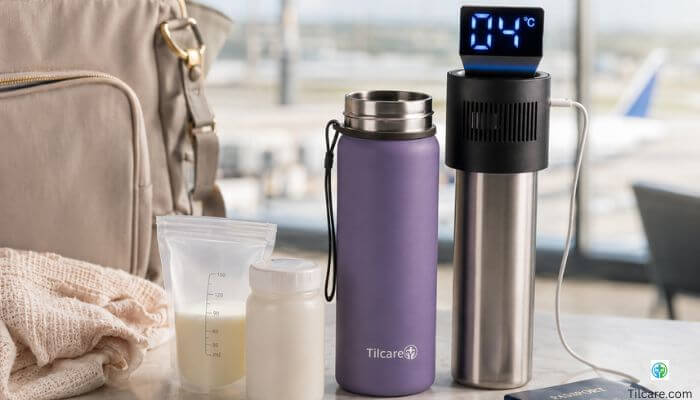
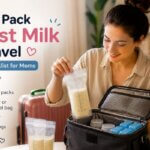
How long can breast milk stay fresh in a cooler? It depends on more than just the clock. Temperature consistency, the type of cooler, ice packs, and how you transport the milk all play an important role. In this guide, we’ll explain how long breast milk can safely stay in a cooler and share practical tips to help keep it fresh while you’re on the go.
Breast milk can stay in an insulated cooler with fully frozen ice packs for up to 24 hours, as long as the cooler stays closed and cold throughout that period.
The 24-hour window becomes shorter if the cooler is opened repeatedly, the ice packs start to thaw, or the cooler is kept somewhere warm.
Table of Contents
How long can breast milk stay fresh in a cooler?
The phrase “up to 24 hours” gets repeated everywhere without the condition attached to it, and that condition is everything. Twenty-four hours is the upper limit when the cooler maintains a genuinely cold internal temperature throughout. It is not a guarantee that applies regardless of how the cooler is used. Outside temperature is the biggest variable. A cooler performing well in an air-conditioned office behaves very differently in a hot car or outdoor setting. Insulation quality compounds this; thick walls and a tight seal slow heat transfer from outside, while thin fabric with a loose zip does not.
There is also a meaningful difference between passive and active cooling. A standard cooler bag or hard case relies entirely on stored cold from ice packs. Once that cold is used up, the temperature rises and does not recover. An active cooling system, like an electric cooler, continues working as long as it has power, which removes the countdown element entirely.
Breast milk storage time chart
| Milk Type | Safe Storage Duration |
| Freshly expressed milk | Up to 4 hours at room temperature |
| Refrigerated breast milk | Up to 4 days |
| Frozen breast milk | Up to 6 months (up to 12 in a deep freezer) |
| Thawed breast milk (previously frozen) | Up to 2 hours at room temperature, or 24 hours refrigerated |
| Leftover milk after a feed | Use within 2 hours; discard after that |
These ranges reflect CDC guidance and represent the outer limits of what is considered safe, when in doubt, the shorter end of any range is the safer call.
6 factors that affect the freshness
- Ambient temperature – The warmer the surrounding environment, the faster a cooler loses its stored cold. A cooler in a 30°C car works against far more heat transfer than the same cooler in a 20°C office.
- Quality of ice packs – Not all ice packs are equal. Gel packs that freeze fully and stay solid longer outperform thin packs that begin softening within an hour or two of leaving the freezer.
- Cooler insulation – Wall thickness and seal quality determine how quickly outside heat reaches the interior. A well-insulated hard case slows this dramatically compared to a thin fabric bag.
- Frequency of opening the cooler – Every time the cooler opens, cold air escapes and warm air enters. A cooler that is opened once stays colder longer than one that is opened every hour to check on bottles or add new milk.
- Amount of milk stored – More milk means more thermal mass that needs to stay cold, but it also means more total cold is being maintained at once. A nearly empty cooler with one bottle and the same ice packs as a full one actually performs worse, because there is less to buffer temperature changes. Know more on how to the milk while on travelling.
- Space inside the cooler – Air gaps inside a cooler warm up faster than the milk itself and create pockets where temperature rises unevenly. Packing the cooler fully, using extra ice packs to fill gaps if needed, helps maintain a more even, colder interior.
Time limits for different situations
- Daily Commute – A standard commute of up to an hour falls well within the safe range for any properly packed cooler. Pre-chill the cooler the night before by placing the ice packs and an empty bottle inside the freezer overnight, then pack milk into an already-cold environment rather than a room-temperature one.
- Workday – A full eight-hour workday with multiple pumping sessions is where cooler quality starts to matter. Add milk to the cooler immediately after each session rather than letting it sit at room temperature first. Two to three ice packs typically cover a standard workday in an office environment.
- Road Trips – Longer drives benefit from a mid-journey check. If ice packs have softened significantly by the halfway point, a stop to refreeze or replace them many petrol stations and rest stops sell ice extends the safe window for the remainder of the trip.
- Air Travel – Breast milk is permitted through airport security as a medically necessary liquid in most countries, though policies vary and should be checked in advance. Frozen milk handles flights particularly well; it stays solid for longer and acts as additional cooling for the cooler interior as it gradually thaws.
- Daycare Drop-Off – A short, well-packed cooler bag covers the typical morning drop-off without issue. Label bottles clearly with date and time so daycare staff can use the oldest milk first, keeping rotation straightforward.
Common mistakes
- Using partially thawed ice packs, packs that were not fully solid before leaving the freezer start the journey already behind they cannot provide the same duration of cold as packs frozen for a full 24 hours beforehand.
- Opening the cooler too often. Each opening lets cold air out and warm air in. Repeated checking throughout the day adds up to significantly more heat exposure than the same cooler opened only when adding new milk.
- Mixing freshly pumped warm milk with chilled milk, adding body-temperature milk directly to already-cold milk, raises the overall temperature of everything in the container. Cooling fresh milk briefly before combining it with chilled milk avoids this.
- Leaving the cooler in a hot vehicle, a parked car heats up rapidly, even with windows cracked. A cooler left in a hot car for even a short period experiences heat exposure far beyond what its insulation is designed to handle.
- Forgetting to pre-chill the cooler. Packing milk into a cooler at room temperature means the first stretch of time is spent cooling the cooler itself rather than maintaining cold for the milk. Pre-chilling removes this lag entirely.
Choosing the right product
| Cooler Type | Temperature Consistency | Portability | Best Use Case | Travel Duration |
| Traditional cooler bag | Moderate — depends on ice packs | High | Daily commute, office | Up to 12 hours |
| Hard-shell cooler | High — better insulation | Medium | Road trips, full days | Up to 24 hours |
| Electric breast milk cooler | Highest — active cooling | Medium | Long workdays, travel with power access | As long as powered |
Frequently asked questions
How long can breast milk stay fresh in a cooler with ice packs?
Up to 24 hours when the cooler stays closed, fully frozen, and away from heat throughout.
Can I add freshly pumped milk to already chilled breast milk?
Yes, but cool the fresh milk briefly first to avoid raising the temperature of the chilled milk.
What happens if the ice packs melt before I get home?
Use the milk within the standard room-temperature window from the point the packs lost their cold, or refrigerate as soon as possible.
Is an electric breast milk cooler better than a regular cooler bag?
For longer trips, an electric cooler like Tilcare breastmilk cooler bottle can be better because it provides active cooling instead of relying only on ice packs
Breast Milk Cooler Bag vs Hard Case Cooler | Which Is Better?