
Do Breathing Trainers Actually Work? Benefits, Results (2026)

The answer depends on how you use it. Many people have noticed genuine improvements in their breathing power, while others have seen little to no difference usually because of inconsistent use or incorrect technique. A breathing trainer is a tool designed to expand lung capacity and strengthen the respiratory system.
Athletes in particular report noticeable improvements in stamina, endurance, and recovery when using it as part of a regular routine.
Key Takeaways
- Regular use strengthens respiratory muscles and improves lung capacity.
- Boosts stamina, endurance, and breathing efficiency during physical activity.
- Safe and easy for daily practice, suitable for beginners and athletes alike.
Table of Contents
What does a breathing trainer actually do?
In simple terms, it improves diaphragm engagement, strengthens respiratory muscles, and builds breathing resistance over time. Many athletes use a lung trainer to enhance respiratory function, giving them better control and endurance during physical activity. Think of it the same way you would any other muscle training, the lungs and the muscles around them respond to consistent resistance work.
Do breathing trainers really work?
Yes, they do work but under specific conditions. Consistent practice with the correct technique is what drives results. This is not a tool that delivers instant improvement. Like any form of training, it requires patience, regularity, and gradual progression before the benefits become noticeable.
When do breathing trainers work?
Results are most likely when:
- You practice on a regular, consistent basis
- You follow proper breathing technique throughout each session
- You combine it with physical activity rather than using it in isolation
- You gradually increase resistance from mild to moderate over time
For people who are looking for a simple home-use option for breathing exercises, a lung trainer for daily breathing practice can help add resistance and structure to regular inhale/exhale training.
When they don’t work?
This is where most people go wrong:
- Inconsistent usage, skipping sessions regularly and expecting results
- Wrong expectations, treating it as a quick fix rather than a training tool
- Incorrect breathing pattern, rushing through sessions without controlled technique
- Using it as a replacement for medical treatment in cases that require professional care
A breathing trainer is a fitness tool, not a medical device. Treating it as one lead to disappointment and sometimes delayed proper care.
Real benefits you can expect
With consistent and correct use, here is what most users experience:
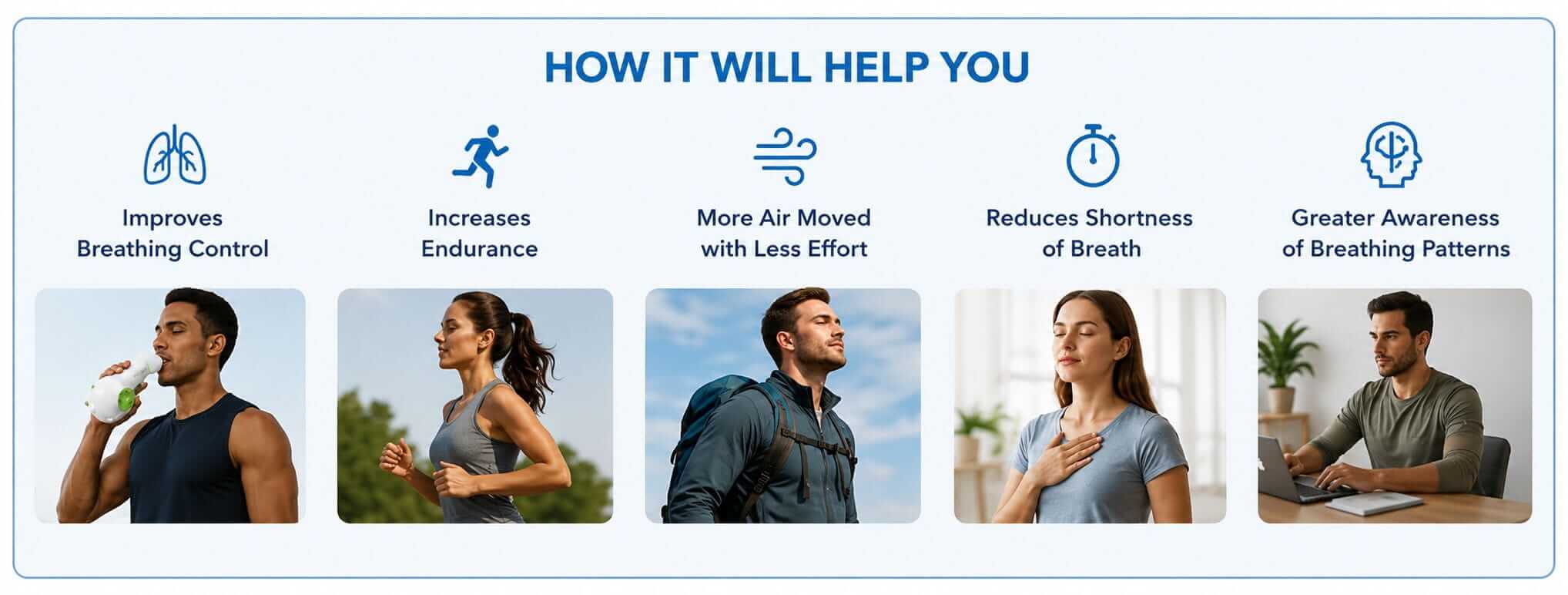
- Improved breathing control during rest and activity
- Better lung efficiency, more air moved with less effort
- Increased endurance during physical exercise
- Reduced shortness of breath in mild cases
- Greater awareness of breathing patterns in daily life
How long does it take to see results?
Set realistic expectations from the start:
- 1–2 weeks — you begin noticing your breathing pattern and developing awareness of diaphragm engagement
- 3–4 weeks — noticeable improvement in breathing control and a reduction in breathlessness during light activity
- 6–8 weeks and beyond — measurable endurance improvement, particularly during sustained physical activity
Results vary based on starting fitness level, consistency, and technique. There are no shortcuts here.
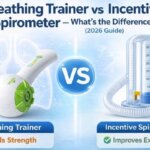
Breathing trainer vs incentive spirometer
These two are often confused but serve different purposes:
- Breathing trainer — builds resistance, strengthens respiratory muscles, improves endurance
- Incentive spirometer — measures and encourages lung volume, primarily used in clinical recovery settings
If your goal is fitness and performance, a breathing trainer is the right tool. If you are recovering from a medical procedure or illness, an incentive spirometer is typically what your doctor will recommend. A full comparison of both will be covered in a separate guide.
Who should use a breathing trainer?
This tool is well suited for:
- Athletes looking to improve stamina and respiratory efficiency
- Singers and performers who need sustained breath control
- People recovering from mild respiratory issues under general fitness guidance
- General fitness users who want to improve endurance and breathing awareness
Who should not rely on it alone?
A breathing trainer should not be the primary or sole approach for:
- People with severe respiratory conditions such as COPD or asthma without medical guidance
- Anyone dealing with ongoing medical issues affecting the lungs or airways
- Post-surgery cases where breathing exercises require supervised rehabilitation
- Anyone experiencing chest pain, persistent breathlessness, or unexplained symptoms
In these cases, consult a doctor first. A breathing trainer may still be part of the recovery plan — but only under professional guidance.
How to use it properly?
Without duplicating the full exercise guide, here are the core principles:
- Inhale slowly and fully — do not rush the breath in
- Exhale in a controlled manner — resist the urge to release quickly
- Keep sessions short and focused — 5 to 10 minutes daily is more effective than long irregular sessions
- Stay consistent — daily practice beats occasional long sessions every time
For a complete step-by-step routine, refer to the breathing exercises guide.
Frequently Asked Questions
Do breathing trainers increase lung capacity?
They improve how efficiently your lungs and respiratory muscles work rather than physically increasing lung size the result is better use of the capacity you already have.
Can you use it daily?
Yes, short daily sessions of 5 to 10 minutes are both safe and recommended for consistent progress.
Are results permanent?
Results are maintained as long as regular practice continues like any fitness training, stopping for extended periods will gradually reverse the gains.
Is it safe for beginners?
Yes, breathing trainers are suitable for beginners. Start at the lowest resistance setting and increase gradually as your control and strength improve.

Is Ear Wax Removal Safe? Risks You Should Know (2026 Guide)

)
)