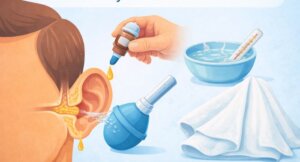
Ear Drops or Ear Wax Removal Tools: Which Works Better? 2026
Which is best ear drops or ear wax removal tools? A blocked, muffled ear is something most of us have dealt with at some point. The instinct for many people is to reach for a cotton bud, but here’s the problem: cotton buds don’t remove earwax. They push it further into the canal, often making the blockage worse. Once you realize that, you’re left with two practical options: ear drops or a wax removal tool.
Both are legitimate solutions, and both are available without a prescription. But they work in completely different ways, and what suits one person may not suit another. This guide breaks down the key differences between the two, explains how to use each one safely at home, and helps you figure out which approach makes more sense for your situation including whether combining them might be your best move.
Table of Contents
What is ear drops and how do they work?
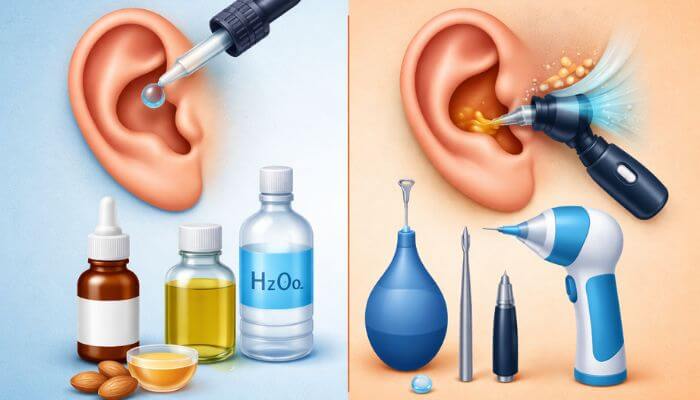
Ear drops are one of the most widely used home remedies for wax build-up and it’s easy to see why. The process is straightforward: a liquid solution is applied directly into the ear canal, where it works to soften or break down accumulated wax. The drops themselves don’t pull anything out; they simply loosen the wax so it can drain naturally or flush out more easily when rinsed.
There are many ear drops available as per sensitivity:
- Hydrogen peroxide drops work by producing a mild fizzing action that loosens and breaks apart hardened wax. They’re widely stocked and generally effective for moderate build-up.
- Carbamide peroxide drops offer a gentler alternative — think of them as a softer version of hydrogen peroxide. They’re a common active ingredient in many over-the-counter ear kits and are better suited to people whose ears are easily irritated.
- Olive oil or almond oil drops take a more natural route. Rather than breaking down wax chemically, they gradually soften it over the course of a few days. Olive oil has a long history of use for this purpose and remains a go-to recommendation from many GPs as a first step.
- Sodium bicarbonate drops work by shifting the pH environment inside the ear, which helps dissolve wax over time. They can be effective, though some people experience a mild, temporary stinging sensation after application.
Using any of these is fairly simple: tilt your head to one side, apply the drops as directed, hold that position for a few minutes to allow the solution to reach the wax, then tilt back and let it drain out.
See our guide on how to use ear drops safely at home
What is ear wax removal tools?
While drops work by changing the consistency of wax, the ear wax removal tools take a more direct approach i.e., physically dislodging or extracting wax rather than waiting for it to shift on its own. This makes them a faster option in many cases, and there’s a reasonable variety to choose from, covering both manual and electric methods.
- Ear bulb syringes are the most popular manual option for home use. You fill the rubber bulb with warm water or a saline solution, place the tip gently at the opening of the ear canal, and apply a controlled squeeze to direct a stream of water inward. The pressure dislodges softened wax and carries it out. One important detail: the water temperature matters. Too cold or too warm, and you risk triggering dizziness — aim for something close to body temperature.
- Ear picks are small, scoop-shaped instruments designed to collect wax that’s sitting near the outer part of the canal. They come in soft medical-grade silicone or steel, depending on the product. These are not intended for deep use — they’re surface tools, and should only ever be used on wax you can clearly see.
- Camera-assisted ear tools represent the more advanced end of the market. These devices pair a compact camera — typically compatible with both Android and iOS with a soft extraction tip. The live visual feed lets you see exactly what you’re doing, making the process more precise and significantly reducing the chance of accidentally pushing wax further in.
- Electric ear wax removers are the most convenient option, though they tend to cost more than manual alternatives. Powered by battery or USB, they use gentle suction or rotation to draw wax toward the entrance of the canal without requiring much technique from the user.
[Internal link: Check our reviews of the best ear wax removal tools available in the UK]
Comparison
Here is the comparison among the tools that will help you to understand it more closely:
| Factor | Ear Drops | Removal Tools | Winner | Notes |
| Method | Chemical softening | Physical extraction | Drops | Less invasive |
| Speed | 15–30 min+ | Immediate | Tools | Faster relief |
| Control | Low | High | Tools | You guide it |
| Ease of Use | Very easy | Moderate | Drops | No technique needed |
| Best For | Mild, dry wax | Stubborn blockage | Tie | Depends on case |
As the table shows, neither method is universally superior. The best choice depends on the type of wax you’re dealing with and what outcome you need.
Which option is better for you?
The honest answer is that it depends on your situation. Here’s a practical way to think about it:
Choose ear drops if:
- Your wax is soft, light, and just starting to cause minor discomfort
- Never undergone or haven’t tried any treatment yet and want to start gently
- Ear canals are sensitive or have a history of irritation
- Can wait with patience for a few days for gradual results
Choose ear wax removal tools if:
- The blockage has built up over time and feels significant
- No results on using ear drops
- More control over what’s happening inside your ear
- You need faster results and the wax is already partially soft
Can you use both together?
Yes, you may use both, but as mentioned above, it depends on which works best. So, it depends on individual results. Using drops first to soften the wax, then following up with a tool to flush or extract it, gives you the benefits of both methods. The NHS recommends using olive oil drops for a few days before attempting irrigation, precisely because the softening step makes removal considerably easier and more comfortable.
When to avoid home treatment entirely?
- Suffering from a perforated eardrum or a history of ear surgery
- You have grommets (ear tubes) in place
- If experiencing significant pain, discharge, or sudden hearing loss
- You’ve had repeated ear infections or any active inflammation
In any of these situations, seeing a GP, audiologist, or ear nurse for microsuction or professional irrigation is the appropriate step.
Frequently Asked Questions
How long should I use the ear drops before expecting results?
Most ear drops take 3–5 days of consistent use to soften wax. If there’s no improvement after a week, consider irrigation or consult a professional.
Is it safe to use a bulb syringe if I’ve never done it before?
Yes, it’s safe when used gently with warm water avoid force and stop if you feel pain. Always soften wax first for better results.
Is it safe to use a bulb syringe if I’ve never done it before?
Yes, it’s safe when used gently with warm water avoid force and stop if you feel pain. Always soften wax first for better results.
Can ear wax removal make hearing worse temporarily?
Yes, drops can temporarily swell wax and reduce hearing before it loosens. This resolves once the wax is cleared.
Are ear candles an effective alternative?
No, ear candles are ineffective and unsafe, with risks like burns. Medical sources advise against using them.