
Can a Breathing Trainer Improve Lung Capacity? (2026 Guide)
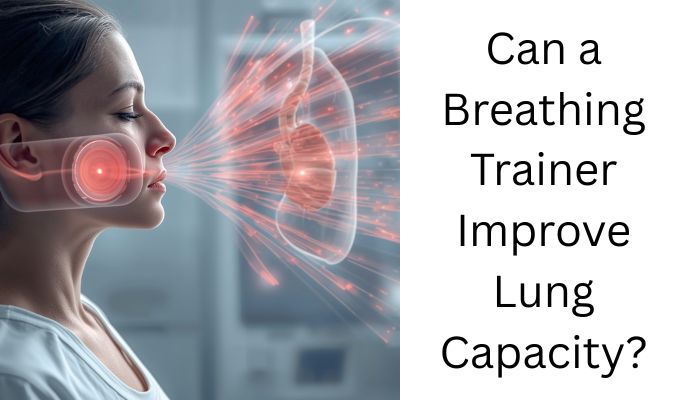
Many people wonder whether a breathing trainer actually helps, and the answer is yes, but with the right expectations. It improves how effectively you use your lungs rather than physically expanding their size. Used regularly and with correct technique, it strengthens your respiratory system, improves breathing efficiency, and builds endurance over time.
Athletes, performers, and fitness users have all reported real benefits when using it consistently as part of their routine.
Table of Contents
Can a Breathing Trainer Improve Lung Capacity?
Yes, when practiced regularly with gradual progression and correct technique, a breathing trainer delivers real results. It enhances breathing efficiency and gives you greater control over every inhale and exhale. The keyword is consistency. Sporadic use produces little to no improvement. A structured daily habit is what drives meaningful change. For more detail you can also read “Do they actually works“.
How does a breathing trainer affect your lungs?
Daily practice strengthens the muscles involved in breathing, allowing you to take in air more efficiently and hold oxygen for longer. Many athletes use breathing trainers specifically to improve their on-field performance and recovery between efforts. The primary mechanism is diaphragm engagement, training the diaphragm to work harder and more efficiently, giving you better control, stability, and endurance during both rest and activity.
What actually improves?
To set the right expectations, here is what a breathing trainer genuinely develops:
- Breathing strength — the respiratory muscles become stronger and more efficient with consistent resistance training
- Endurance — you can sustain physical effort for longer before breathlessness sets in
- Control — each breath becomes more deliberate and efficient
- Oxygen efficiency — your body gets better at using the oxygen available with each breath
What does NOT change?
Lung size does not increase. No breathing tool physically enlarges the lungs. What improves is how effectively you use the capacity you already have — and for most people, that gap between current and potential efficiency is significant.
When will you notice results?
Set realistic expectations from the start:
- 1–2 weeks — you develop awareness of your breathing pattern and diaphragm engagement
- 3–4 weeks — noticeable improvement in breathing control during daily activity and light exercise
- 4–8 weeks — measurable endurance improvement, particularly during sustained physical effort
Individual results vary based on starting fitness level, consistency, and technique quality.
When does it work best?
A breathing trainer delivers the strongest results when:
- Used consistently every day rather than occasionally
- Combined with a slow, controlled breathing technique during every session
- Paired with regular physical activity rather than used in isolation
- Resistance is increased gradually as strength and control improve
For people who want a simple home-use option for structured breathing exercises, a breathing trainer for daily practice can help add resistance and consistency to regular inhale and exhale training.
When it won’t make a big difference?
Be honest with yourself about these situations:
- Inconsistent use — skipping sessions regularly cancels out progress.
- Expecting fast results — respiratory muscle training takes weeks, not days.
- Serious medical conditions — a breathing trainer is a fitness tool, not a treatment. Conditions like COPD, asthma, or post-surgical recovery require medical guidance first.
Breathing trainer vs cardio for lung capacity
Both improve respiratory performance, but through different mechanisms:
- Breathing trainer — targets muscle strength and breathing control directly
- Cardio exercise — increases oxygen demand and builds overall endurance
Neither replaces the other. The best results come from combining both cardio builds the cardiovascular base, while a breathing trainer sharpens the respiratory muscle strength and control that cardio alone does not specifically target.
Who will benefit the most?
A breathing trainer is particularly effective for:
- Athletes looking to improve stamina and recovery between efforts
- Singers and performers who need sustained breath control
- Beginners working to build better breathing habits and lung strength
- People experiencing mild shortness of breath during everyday activity
Quick usage tip
Keep sessions simple and focused:
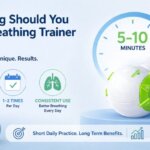
- 5 to 10 minutes daily is enough for short, consistent sessions to outperform long, irregular ones
- Breathe slowly and in a controlled manner throughout; do not rush
- Consistency matters more than intensity, especially in the early weeks
For a complete step-by-step breathing routine, refer to the breathing exercises guide.
Frequently Asked Questions
Does it increase lung size?
No, lung size does not change. What improves is how efficiently you use your existing lung capacity, which for most people produces a significant and noticeable difference in performance.
How long to see results?
Initial awareness develops within one to two weeks. Noticeable control improvement comes around three to four weeks. Endurance gains take four to eight weeks of consistent practice.
Can beginners use it?
Yes, start at the lowest resistance setting and focus on slow controlled breathing before increasing difficulty. It is suitable for all fitness levels.
Is it better than exercise?
Neither is better; they complement each other. Cardio builds overall endurance, while a breathing trainer specifically strengthens the respiratory muscles. Combining both gives the best results.
Breathing Trainer vs Incentive Spirometer — What's the difference?

)
)