
How to dry ears after shower? No cotton swabs (2026)
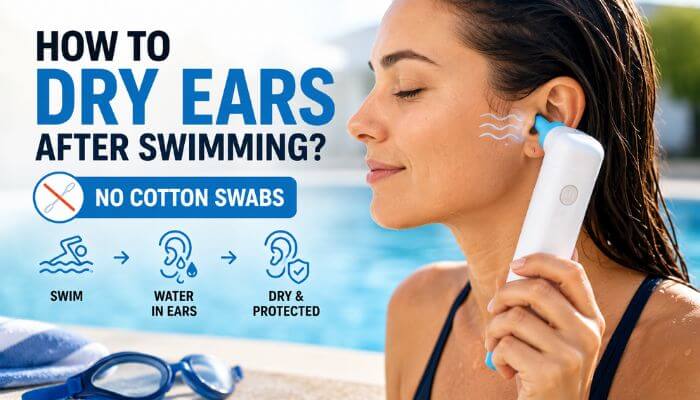
How to dry ears after shower? Most people reach for a cotton swab after a shower out of habit rather than because it actually works. It feels like the logical move: something is in there, a swab goes in, problem solved. Except the problem is not solved. The water moves, the wax moves deeper, and the ear ends up in a worse position than before the swab appeared.
But there is a better routine, like using an ear dryer; it takes about the same amount of time, and it does not involve putting anything inside the ear canal.
Quick Ear Care Routine
Avoid cotton swabs—tilt your head, gently move your jaw, and use a soft cloth on the outer ear to safely drain water. For persistent moisture, a Tilcare Electric Ear Dryer provides controlled warm airflow without inserting anything into the canal.
- ✓ Tilt and wait: 30–45 seconds per ear to let gravity do the work
- ✓ Dry the outer ear only: soft cloth or microfiber
- ✓ Warm air if needed: gentle airflow for quick drying
- ✓ USB rechargeable, quiet, compact, and easy to use daily
Consistency matters most: daily showers, frequent swimmers, and post-swim routines benefit the most from repeating this simple no-swab approach.
Table of Contents
Why do cotton swabs not belong inside the ear?
The ear canal is not a surface that needs to be wiped. It is a self-cleaning passage that moves debris outward naturally through jaw motion and skin migration. A cotton swab inserted into that passage compresses wax against the canal wall, pushes it toward the eardrum, and scratches the delicate skin lining along the way.
The NHS, the CDC, and the American Academy of Otolaryngology all advise against inserting swabs into the ear canal not as a precaution but as a consistent recommendation based on the damage they reliably cause over repeated use. Wet ears make this worse. Learn more from the American Academy of Otolaryngology.
Moisture softens the canal skin, which means a swab that might slide past without obvious harm on a dry day causes more friction and more micro-abrasion when the ear is freshly showered. The combination of pushing wax deeper and scratching softened skin is exactly the condition that leads to outer ear irritation over time.
How to dry ears after shower?
Replacing cotton swabs does not mean doing nothing — it means doing something that works instead.
- Tilt and wait: Immediately after the shower, tilt the head so the affected ear faces the floor. Hold that position for 30 to 45 seconds. Gravity does the work. Gentle jaw movement, opening and closing the mouth slowly — shifts the geometry of the canal slightly and helps water move toward the opening. A soft cloth held loosely against the outer ear catches whatever drains out without any insertion required.
- Dry the outer ear only: A corner of a soft towel or a microfibre cloth against the outer ear and the visible entrance to the canal removes surface moisture without going inside. The key word is outer — the cloth touches the parts of the ear that are visible, nothing further.
- Warm air if needed: For people who shower daily or who notice that water tends to sit in one ear longer than the other, a brief pass of gentle warm air at the ear opening speeds up evaporation of whatever moisture remains after the tilt. This does not need to be a complex step; 30 to 45 seconds per ear is enough to clear residual moisture without any contact with the canal.
Tools that help without insertion
The tilt and cloth method covers most situations on its own. For daily showerers, frequent swimmers, or anyone who finds that one ear consistently holds water longer than the other, having a purpose-built drying tool removes the temptation to reach for a swab when the tilt alone does not feel like enough. The Tilcare Electric Ear Dryer delivers controlled warm airflow through soft interchangeable tips that sit at the ear opening rather than inside the canal.
The tips are shaped to direct air correctly without requiring precise positioning or any insertion, which makes the step repeatable and consistent rather than something that varies each time. It is USB rechargeable, quiet enough to use without disturbing anyone nearby, and compact enough to keep on a bathroom shelf rather than stored away. For anyone building a no-swab routine as a daily habit, having the tool already on the counter removes the friction that makes new habits fall apart. To know which is best for you ear plug or ear dryer.
When the routine matters most?
A single shower on an ordinary day is unlikely to cause any lasting issue even without a drying routine. The routine earns its value through repetition: daily showers across weeks and months, swimming sessions stacked on top of each other, or any pattern where the ear is in contact with water more than a couple of times per week. Swimmers have the most to gain from consistency here.
The cumulative moisture exposure across a training week is significant, and each session where the ear is not properly dried after adds to that total. For a complete guide covering both swimming and showering aftercare in detail, refer to the full guide on how to dry ears after swimming or showering.
Daily showerers who have never experienced any ear discomfort may feel the routine is unnecessary, and for many people it genuinely is. The ones who benefit most are those who already notice persistent fullness, muffled hearing after showers, or recurring outer ear irritation that they have been managing with swabs for years.
Building it into an existing habit
The easiest way to make any new routine stick is to attach it to something already happening. Post-shower ear drying fits naturally at the end of toweling off; head tilts happen while drying hair or face; the cloth step happens while the towel is already in hand; and the warm air step takes under a minute before putting the towel away. Nothing about the routine requires stopping what is already happening. It runs alongside the existing post-shower sequence rather than adding a separate step that has to be remembered independently.
For swimmers adding this to a pool bag routine, the ear dryer sits alongside goggles and a swim cap item that come out after every session without being thought about. For more on building a complete swim bag setup that includes ear care, refer to the guide on what to pack in a swim bag for ear care.
Frequently asked questions
Is it safe to never use cotton swabs in the ear?
Yes, the ear canal cleans itself naturally and does not require swabs at any point; the outer ear is the only area that benefits from manual drying.
What should I use instead of cotton swabs after a shower?
A tilt and wait with gentle jaw movement, followed by a soft cloth on the outer ear and optional warm airflow at the opening, covers everything a swab was never actually doing.
How long does it take for water to drain from the ear naturally?
For most people, tilting and jaw movement clears water within one to two minutes. Persistent fullness lasting several hours or longer is worth paying attention to.
Can I use a hair dryer instead of an electric ear dryer?
A hair dryer on its lowest setting held at a safe distance can work in the short term. Still, the airflow and temperature are harder to control; a purpose-built ear dryer consistently is the more reliable daily option.
Ear Dryer vs Earplugs for Swimming: Which is best? (2026)


)
)