How to Dry Ears After Swimming or Showering? Complete Guide 2026
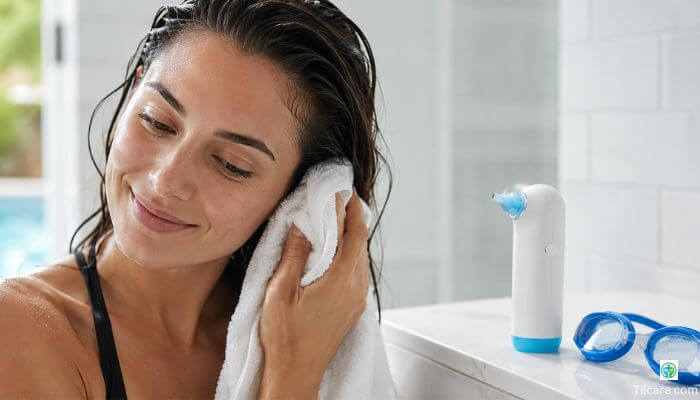
Water trapped in the ear after swimming or showering is one of those small discomforts that most people dismiss until it becomes a recurring problem then how to dry ears after swimming? The muffled hearing, the pressure, the persistent feeling of fullness- for casual swimmers, it is an occasional nuisance. Still, for regular swimmers, surfers, and anyone who showers daily, it becomes a pattern that affects comfort and ear health over time.
Quick Stat
According to the CDC, swimmer’s ear affects approximately 2.4 million Americans every year, leading to around 500,000 doctor visits and nearly $500 million in annual healthcare costs. The good news is that many cases are preventable with a proper ear-drying routine after water exposure.
This guide covers why trapped water matters, the safest methods for removing it, what to avoid, and how to build a consistent post-swim or post-shower ear care routine.
Table of Contents
Why does water get trapped in the ear?
The ear canal is a narrow, curved passage that does not drain as freely as its anatomy might suggest. Water that enters during swimming, bathing, or showering can sit against the eardrum or collect along the canal walls, held in place by surface tension and the angle of the canal itself. Most of the time, the ear clears naturally within a few minutes. When it does not, particularly after repeated water exposure, the sustained moisture softens the skin lining the canal, which makes it more vulnerable to irritation and bacterial entry. This is the mechanism behind swimmer’s ear, and it applies to anyone with regular water contact, not just competitive swimmers.
Certain factors make trapping more likely: narrow or curved canal anatomy, earwax that absorbs and holds moisture, the use of earbuds or hearing aids that restrict airflow, and high-frequency swimming or bathing without a drying routine in between.
What not to do first?
Before covering what works, the methods that cause more harm than help are worth addressing clearly.
- Cotton swabs are the most commonly reached-for solution and consistently the least appropriate one. The NHS, the CDC, and the American Academy of Otolaryngology all advise against inserting cotton swabs into the ear canal. They do not absorb water effectively; they push debris and wax deeper toward the eardrum, and they scratch the delicate canal lining, which is precisely what makes an already-moist environment more vulnerable.
- Hair dryers held close to the ear can deliver heat that is uneven, too intense, or too dry, all of which irritate canal skin rather than gently clearing moisture. The distance and heat level are difficult to control reliably.
- Tilting and vigorous shaking can help in mild cases but create pressure changes in the ear that cause discomfort when water is lodged more deeply.
If showering is the main time you notice water lingering, our guide on how to dry ears after showering without cotton swabs covers a simple routine built around gravity, outer-ear drying, and gentle airflow.
How to dry ears after swimming or showering?
- The gravity tilt: Tilt the affected ear toward the shoulder and hold still for 30 to 60 seconds. Gentle jaw movement, chewing, or opening the mouth slowly shifts the canal geometry slightly and can help water move toward the opening. A soft cloth held against the outer ear catches what drains out.
- The single-finger pull: Gently pulling the outer ear upward and backwards straightens the natural curve of the canal, which can allow water to flow out more freely under gravity. This works best immediately after exiting the water before the person has moved around significantly.
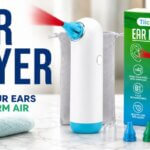
- Warm air at a safe distance: Gentle airflow directed toward the ear opening can help with moisture that does not drain through gravity alone. Purpose-built ear dryers make this approach more consistent because the airflow comes from a device designed specifically for the routine. If you’re comparing different designs and features, see our guide to the best electric ear dryers.
- Drying drops: Over-the-counter ear drying drops typically contain isopropyl alcohol or a diluted acetic acid solution. The alcohol displaces water and evaporates quickly, while the acid creates a mildly inhospitable environment for bacterial growth. These are widely used by swimmers and are considered safe for healthy ears without a history of a perforated eardrum or ear surgery. Always check the label and avoid use in ears with known damage.
For a rechargeable option, the Tilcare Electric Ear Dryer includes three interchangeable soft tips, quiet operation, and a compact design that can be kept with swim or shower essentials.
Building a post-swim or post-shower ear routine
The difference between occasional trapped water and a recurring problem is almost always consistency. A routine done briefly after every water exposure takes less than two minutes and prevents the moisture accumulation that leads to chronic issues.
A practical sequence:
- Exit the water and tilt each ear toward the shoulder for 30 to 60 seconds, using gentle jaw movement.
- Dry the outer ear and the ear opening with a soft cloth, no insertion.
- Apply warm airflow from an electric ear dryer for 30 to 45 seconds per ear at a comfortable distance.
- The routine can also start before you get out of the water. Some swimmers use earplugs to reduce how much water reaches the ear during a session, then use their usual drying routine afterward. The two approaches serve different purposes rather than replacing one another. Our ear dryer vs. earplugs for swimming comparison explains when each one fits into a swim routine.
This routine works for both swimming and daily showering. The key is doing it consistently rather than only when the ear already feels blocked.
Swimmer’s ear vs trapped water
Trapped water typically resolves within a few minutes to a few hours after drying. The sensation is muffled hearing and fullness, sometimes with mild crackling when moving the jaw. Swimmer’s ear, otitis externa, presents differently. Pain that increases when the outer ear or ear flap is touched or pulled, discharge from the canal, swelling, or symptoms that worsen over 24 to 48 hours rather than resolving are signs that an infection has developed.
According to the American Academy of Otolaryngology, swimmer’s ear is responsible for around 2.4 million healthcare visits in the US each year, and untreated cases can progress to more significant infections. If symptoms suggest infection rather than trapped water, a doctor visit is the appropriate step rather than continued home treatment. Do not attempt to irrigate or dry a painful ear, discharging, or showing signs of swelling.
Electric ear dryer vs hair dryer, which is safer?
This is one of the most common questions for anyone looking at drying options. The short answer is that a purpose-built electric ear dryer offers more consistent and appropriate airflow than a hair dryer used at a distance.
A hair dryer’s lowest setting still delivers heat and airflow that varies significantly depending on the model, distance, and angle. The ear canal skin is sensitive and reacts to sustained heat exposure. Purpose-built ear dryers are calibrated for the temperature range appropriate for ear use and designed with tips that position the airflow correctly without guesswork. For a detailed breakdown of the differences between the two options, refer to the guide on electric ear dryer vs hair dryer.
What to pack for ear care at the pool or beach?
Keeping a few simple items together makes the after-swim routine easier:
- Microfibre towel: Useful for drying around the outer ear and keeping wet gear separate.
- Swim earplugs: Helpful for reducing water entry while swimming.
- Compact ear dryer: Useful when you prefer a consistent airflow-based drying routine after leaving the water.
- Small storage pouch: Keeps earplugs, the dryer, and other small swim items together and easy to find.
- Spare charging cable: Worth carrying if your ear dryer is rechargeable and regularly travels with your swim gear.
For the rest of the pool, beach, and open-water basics, see our complete swim bag essentials checklist.
Frequently asked questions
How long does it take for water to drain from the ear naturally?
Usually a few minutes to a few hours, especially with head tilting or gentle jaw movement.
Is it safe to use an electric ear dryer every day?
Yes, when used properly at a comfortable distance after swimming or showering.
Can trapped water cause an ear infection?
Yes, prolonged moisture can increase the risk of swimmer’s ear.
What is the difference between swimmer’s ear and regular trapped water?
Trapped water usually clears after drying, while swimmer’s ear causes pain, discharge, or worsening symptoms.
Should I use cotton swabs to dry my ears after swimming?
No, cotton swabs can push debris deeper and irritate the ear canal.

How to Warm Up Your Voice Quietly? Guide