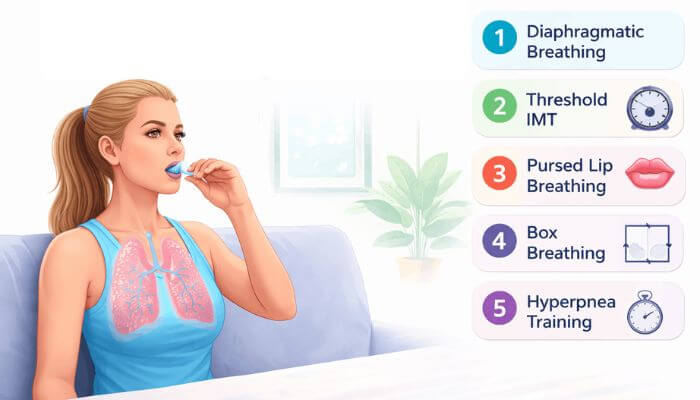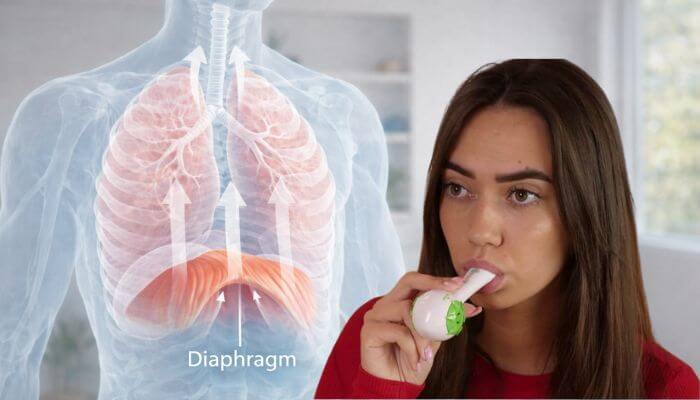
A breathing trainer, also known as a lung trainer or respiratory muscle trainer, is a small handheld device that adds resistance to your breathing. This resistance forces your respiratory muscles to work harder during inhalation or exhalation, helping strengthen the diaphragm and other muscles involved in breathing.
Think of it as strength training for your lungs. Just like lifting weights strengthens your arms or legs, lung trainers strengthen the muscles responsible for breathing. Over time, this can improve breathing efficiency, endurance, and overall respiratory performance.
These devices are used by a wide range of people. Athletes use them to improve endurance and oxygen efficiency, singers and musicians rely on them to develop breath control, and individuals with respiratory conditions may use them as part of structured breathing exercises. Many healthy individuals also use such devices simply to improve lung strength and breathing capacity for everyday activities.
In this guide, we’ll explore how it work, the different types available, and the benefits they may provide when used regularly.
Table of Contents
Understanding breathing trainers benefits and their core functions
Breathing or lung trainers are specialized devices designed to strengthen respiratory muscles through resistance-based breathing exercises. When you breathe through the device, it creates controlled resistance that forces the diaphragm and intercostal muscles (the muscles between your ribs) to work harder than during normal breathing.
Over time, this resistance training can help improve:
- respiratory muscle strength
- breathing efficiency
- oxygen utilization during activity
- breath control
Research on respiratory muscle training (RMT) has shown that strengthening breathing muscles can improve endurance and reduce breathing fatigue during physical exertion.
For example, studies published in the Journal of Sports Science & Medicine and the European Respiratory Journal have shown that inspiratory muscle training can improve exercise performance and breathing efficiency in athletes and active individuals. These studies support the idea that respiratory muscles respond to training in a similar way to other skeletal muscles in the body.
Types of breathing trainers available in the market
| Type | Function | Best For |
| Inspiratory Muscle Trainers | Create resistance during inhalation | Athletes, COPD patients |
| Expiratory Trainers | Add resistance to exhalation | Singers, wind instrument players |
| Dual-Function Devices | Train both inhale and exhale | General fitness enthusiasts |
| Smart Breathing Trainers | App-connected with guided programs | Tech-savvy users, beginners |
Which type is best for you?
There are several types of breathing trainers available today, each designed to improve respiratory strength in different ways. The most common option is a resistance-based breathing trainer, which strengthens the diaphragm and other respiratory muscles by making them work harder during inhalation or exhalation.
Dual-function breathing trainers are particularly popular because they allow users to train both inspiratory and expiratory breathing muscles using adjustable resistance levels. Devices such as the Tilcare Lung Trainer, for example, are designed to support both types of respiratory training in a single device, allowing users to gradually increase resistance as their breathing strength improves.
Some newer breathing trainers also include smart features, such as mobile app connectivity or smartwatch integration to track breathing exercises and progress over time. These devices may appeal to users who prefer more data-driven training.
Before choosing a device, it is helpful to understand how it actually work, which we will explore in the next section.
How a breathing or lung trainer works?
A breathing trainer works by creating controlled resistance during breathing exercises. When a user inhales or exhales through the device, air flows through internal chambers designed to regulate airflow and resistance. This resistance forces the respiratory muscles to work harder than during normal breathing. Over time, this process helps strengthen the diaphragm and surrounding muscles.
Most trainers operate using one or more of the following mechanisms:
- Adjustable airflow resistance – allows users to increase or decrease difficulty levels
- Oscillating airflow patterns – create pulsing resistance that stimulates respiratory muscles
- Internal pressure chambers – regulate airflow and control breathing resistance
With consistent use, respiratory muscles can become stronger and more efficient, which may help improve breathing during exercise and daily activities.
Who can use breathing trainers?
These devices are not limited to medical use. Many professionals and everyday users incorporate respiratory muscle training into their routines.
- Athletes – Endurance athletes such as runners, swimmers, cyclists, and rowers often train their breathing muscles to improve oxygen efficiency during intense activity. Several studies on inspiratory muscle training (IMT) have shown improvements in endurance performance and reduced breathing fatigue during high-intensity workouts. Stronger breathing muscles can help athletes maintain performance longer and recover more quickly between training intervals.
- Singers and Vocal Performers – Professional singers rely heavily on diaphragm control to sustain notes and maintain vocal stability. Vocal coaches often teach diaphragmatic breathing techniques as part of vocal training. Breathing trainers may help singers strengthen the muscles involved in breath support, allowing them to sustain notes longer and maintain vocal consistency during long rehearsals or performances.
- Wind and Brass Musicians – Musicians who play instruments such as trumpet, trombone, saxophone, flute, or clarinet depend on steady airflow to maintain tone quality. Improved breath control can help musicians sustain notes longer and maintain consistent sound during extended practice sessions or performances.
- Divers and Breath-Control Sports – Freedivers, swimmers, and certain martial artists often train breathing control to improve lung efficiency and breath capacity.Structured breathing exercises and respiratory muscle training are sometimes incorporated into these training programs to improve breath control and endurance.These examples demonstrate that breathing trainers are used across many fields—not only for respiratory health but also for performance, endurance, and breath control.
Frequently Asked Questions
Do breathing trainers really work?
Yes. it helps strengthen respiratory muscles through resistance breathing exercises, which can improve breathing efficiency and endurance over time.
Can breathing trainers increase lung capacity?
It do not enlarge the lungs, but they help respiratory muscles work more efficiently, allowing better use of existing lung capacity.
How often should you use a breathing trainer?
Most programs recommend using a trainer for 5–10 minutes once or twice daily to gradually strengthen breathing muscles.
Are breathing trainers used by athletes?
Yes. Many endurance athletes such as runners, swimmers, and cyclists use respiratory muscle training to improve breathing efficiency and delay fatigue.
How long does it take to see the results?
Many users begin noticing improved breath control and breathing strength within 2–4 weeks of consistent training.
Are these safe to use daily?
For most healthy individuals, these products are safe for daily use when used according to instructions.