
Ear Dryer vs Earplugs for Swimming: Which is best? (2026)
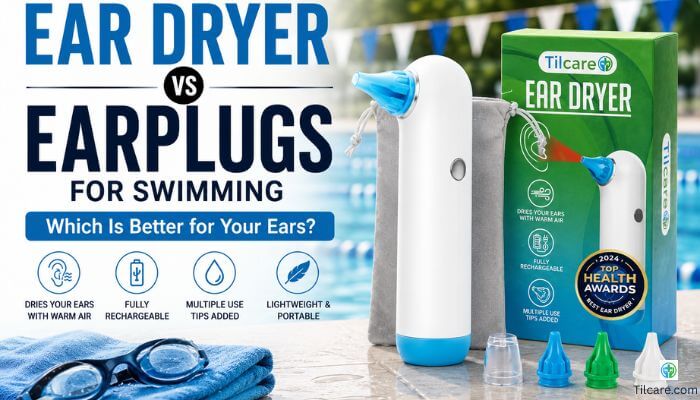
Most conversations about ear care for swimmers treat ear dryers and earplugs as competing options, as if choosing one means you don’t need the other. That framing misses something important. These two tools address entirely different moments in the swimming experience.
Earplugs work before and during the swim. An ear dryer works after. Understanding that distinction makes the decision about which to use, or whether to use both, considerably clearer.
Earplugs prevent water entry during swimming, while an ear dryer removes residual moisture afterward. Using both together ensures the most complete ear care routine for swimmers. Casual swimmers may rely solely on a dryer, but frequent and competitive swimmers benefit most from the combination.
Table of Contents
Difference: prevention vs aftercare
Earplugs are a barrier. Their job is to stop water from entering the ear canal during swimming. An electric ear dryer is a recovery tool. Its job is to remove moisture that has already reached the ear, whether or not earplugs were worn.
Neither product replaces the other because they are not solving the same problem. A swimmer who wears earplugs every session still benefits from a drying routine afterward. A swimmer who uses an ear dryer without earplugs is managing moisture after the fact rather than reducing how much enters in the first place. The two approaches work best together, but each has enough value on its own to be worth understanding.
How earplugs work and what they do well?
Swimming earplugs create a physical seal at the entrance to the ear canal, reducing the volume of water that reaches the canal during submersion. They are most effective for swimmers who are repeatedly fully submerged, competitive lap swimmers, open-water swimmers, and anyone doing flip turns or diving starts.
Well-fitted earplugs reduce the sensation of water fullness during a swim, which improves comfort and concentration in the water. For swimmers prone to outer ear irritation from frequent water exposure, consistent earplug use reduces cumulative moisture contact over time. They are also simple to use, inexpensive relative to electronic alternatives, and available in multiple formats: silicone, foam, and flanged to suit different canal shapes and comfort preferences.
Where earplugs fall short?
No earplug provides a completely watertight seal for every swimmer in every condition. Canal anatomy varies significantly between individuals, and a plug that fits one person securely may sit loosely in another. Water pressure during diving, flip turns, or extended underwater time can work past even a well-fitted plug.
Earplugs also do nothing about moisture that is already present. Humidity, condensation, and residual water from before the plug was inserted are not addressed by a barrier worn during the swim. After removing earplugs, the ear still benefits from a drying routine, particularly for swimmers who train daily or multiple times per week, as cumulative moisture exposure builds over time.
Some swimmers find earplugs uncomfortable during long sessions or find that pressure builds up while wearing them. Others struggle with consistent fit in one or both ears. In these situations, relying entirely on earplugs for ear moisture management leaves a gap.
How an electric ear dryer works and what it does well?
An electric ear dryer delivers a gentle, controlled flow of warm air toward the ear opening, promoting evaporation of moisture in and around the canal without contact, pressure, or insertion. The warm air accelerates the natural drying process, which would otherwise take minutes to hours, depending on how much water entered and the canal’s natural drainage.
The key advantage over improvised alternatives, such as cotton swabs, hair dryers, and vigorous shaking, is control. The airflow is consistent, the temperature is appropriate for use near the ear, and the shaped tips position the air correctly without the risk of contact with the canal wall. It is a repeatable process that takes under a minute per ear and becomes a straightforward part of a post-swim routine.
For swimmers who find earplugs uncomfortable, swim in conditions where earplugs are impractical, or want a reliable aftercare routine regardless of what they wear during the swim, an electric ear dryer covers the recovery stage that no earplugs address.
Why swimmers benefit from using both?
The strongest ear care routine for a regular swimmer uses both tools at their appropriate stage. Earplugs reduce water entry during the swim. An electric ear dryer clears residual moisture afterward. Together, they address the full arc of water exposure before, during, and after, rather than relying on one product to cover everything it was not designed to handle.
For competitive swimmers training five or six days a week, this combination reduces the cumulative moisture exposure that can create conditions for outer ear irritation over the course of a season. For casual swimmers who get in the water two or three times a week, it takes a routine that might otherwise feel unnecessary, making it two minutes of actual daily effort.
Who needs which by swimmer type?
- Competitive and frequent lap swimmers: Both. High-frequency water exposure warrants prevention during swimming and active drying after every session.
- Open-water and ocean swimmers: Both, with particular attention to aftercare. Open-water conditions make consistent earplug fit harder to guarantee, and post-swim drying becomes more important as a result.
- Casual recreational swimmers: An ear dryer alone is sufficient for most situations. Casual swimmers who are not submerging repeatedly often find earplugs unnecessary a consistent drying routine after the swim handles residual moisture without additional equipment.
- Children and younger swimmers: Earplugs sized appropriately for smaller canals work well for prevention. An ear dryer with soft tips is a practical aftercare option that avoids the temptation of cotton swabs.
- Swimmers with a history of outer ear irritation: Both consistently. This is the group that benefits most from treating ear care as a two-stage process rather than an afterthought.
Ear Dryer vs Earplugs for Swimming: Side-by-Side
| Feature | Earplugs | Electric Ear Dryer |
|---|---|---|
| When used | Before and during swimming | After swimming or showering |
| Purpose | Prevent water entry | Remove residual moisture |
| Contact required | Yes — sits at canal entrance | No — air directed at opening |
| Effectiveness for wet ears | None | High |
| Effectiveness during swim | High | Not applicable |
| Reusable | Yes | Yes |
| Best for | Frequent submersion, lap swimming | Daily aftercare routine |
| Works without the other | Partially | Partially |
| Combined use | Recommended for full coverage |
Where the Tilcare electric ear dryer fits?
For the aftercare stage of any swimmer’s routine, the Tilcare Electric Ear Dryer is built around the features that matter for regular use and is USB rechargeable. Hence, it is ready to use without battery management, with three interchangeable soft tips for a comfortable fit at the ear opening, quiet operation that does not make the routine feel disruptive, and a compact, washable carrying case that makes it practical to keep in a swim bag rather than leave it at home. To explore the full range of ear drying options available, browse the complete electric ear dryers collection.
It does not replace earplugs. It covers the part of ear care that earplugs cannot. For swimmers building a complete routine, that distinction is exactly the point. For a full guide to post-swim and post-shower ear drying, refer to the complete guide on drying ears after swimming or showering.
Frequently asked questions
Do I need an ear dryer if I already wear earplugs while swimming?
Earplugs reduce water entry but do not remove residual moisture. A drying routine after the swim still adds value even with consistent earplug use.
Can I use an electric ear dryer instead of earplugs?
Yes, but they serve different purposes. Earplugs prevent water entry during the swim, while an ear dryer handles moisture afterward, so using only one leaves part of the process unaddressed.
Are electric ear dryers safe for regular swimmers?
Yes, purpose-built electric ear dryers use gentle, warm airflow at appropriate temperatures and are designed for regular post-swim use without contact or pressure in the ear canal.
Which is better for open-water swimming, earplugs or an ear dryer?
Both, used together, open-water conditions make a consistent earplug fit harder to guarantee, which makes reliable aftercare drying more important rather than less.
Best Electric Ear Dryers: Top Picks for Swimmers & Everyday Use



)
)